Nathalie is the owner of the Instagram account My Backyard Paradise. Together with her husband and their three teenage daughters she runs her own ‘mini backyard farm’ in Belgium. The beautiful pictures she shares with her Instagram followers show that this truly is a backyard paradise. In June 2018 Nathalie decided to extend her mini farm with three ex-battery hens. Follow their journey to recovery in the two-part photo diary she kept for us.
A laying hen, one that can lay up to 300 eggs a year, is what we were missing. During autumn, our purebred chickens don’t lay any eggs for a long time. They instead take spend their time and energy renewing their plumage and waiting for the days to get longer again. Last year we didn’t have any eggs for over 3 months despite having more than ten hens! We decided that if we wanted fresh eggs during autumn, we had to buy laying hens.
We always buy our new chickens from a smaller trader or a hobby breeder, so we can actually see the chickens and know they have access to grass, clean water and decent housing. But we like the idea of rescuing a few laying hens destined for slaughter by giving them a good life in our garden. The life of battery hens ends after just sixteen months. Their bodies need time to recover and their egg production will stop. This means a loss for the industry. Besides that, after each moult the egg production will drop, and the industry does not accept that!
So that’s what we did. First thing to do was find a place where you can rescue commercial laying hens from slaughter. The first option we came across was www.redeenlegkip.be (‘Save a battery hen’), a Belgian website where you can buy or adopt a laying hen. If you decide to adopt a hen, you’ll pay a monthly contribution of €5 and get 24 egg per month in return. When you adopt or buy a chicken, the organization ensures the chickens are collected from the companies and given appropriate first aid. However, we wanted to experience this ourselves. After continuing my search, I came across another Belgian website www.lespoulesheureuses.org (recently also available in France). They give you the opportunity to collect the chickens yourself, so you’ll know the address and code (the one you can find on the egg) of the company.
We then had to wait for the right weather. The best time to save a laying hen is when you can give her the ideal conditions to recover. They often don’t have many feathers left and have probably never been outside their barn, where the temperature is always at least 18 degrees! They’ve never seen rain and you should also be careful with draught and wind. You don’t want them to get ill, they have experienced more than enough stress already.
Week 1
On June 16th 2018, it is finally happening. I reserved three Isa Brown chickens from a code 2 company. Code 2 means the eggs from this company are sold as free-range eggs. Sounds good, you might think…
Free-range eggs from the commercial industry come from chickens that only have access to barns. They have perches, nesting boxes and scratching areas with some straw on the floor. There is a maximum of nine chickens per square meter and debeaking is allowed. This is probably not what most of us have in mind when we think of free-range chickens…
My youngest nine-year-old daughter is joining me on my way to pick up the chickens. I tell her in advance that the chickens will be in a bad shape and will look nothing like the chickens we have at home, that she isn’t allowed to pick them up and cuddle them, and that we have to take care of them first. We are not the only ones here today to buy chickens. An older couple buys two chickens and there is someone with a trailer with 50 chicken cages. People keep on coming. We ask a staff member if we can have three chickens. He looks at my daughter first before turning around to get them for us.Of course, we are not allowed in the barns, we’re not even allowed to take a picture. The chickens we get are in a much better condition than the ones the older couple got, ours still have a lot of feathers. Maybe I shouldn’t have taken my daughter with me, to get a more honest impression of the condition of an average laying hen. The man probably had our daughter in mind when he chose our chickens. After paying €3 per chicken, the life these chickens deserve can finally begin. At home everything is ready for them. After driving 10 minutes, my daughter and I look at each other. It’s smelly in the car. And it’s a strange smell, not like normal chicken manure, but a chemical, unnatural smell. The chickens are quiet, I hope they will survive the one hour drive home…
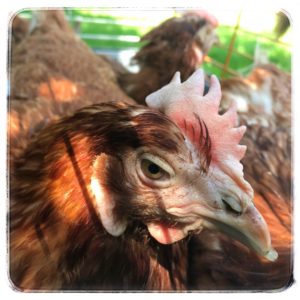
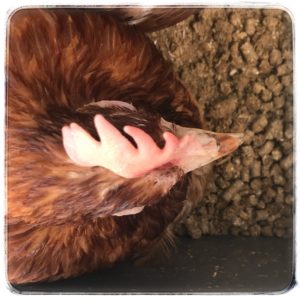
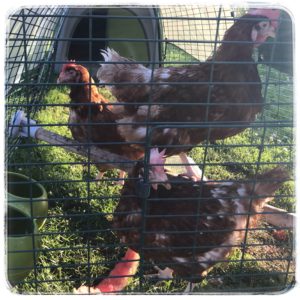
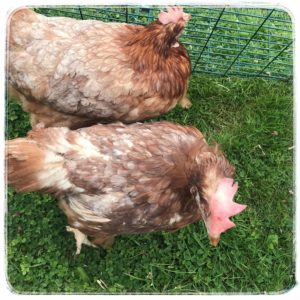
When we get home, we inspect them carefully. They seem numb, or are they frozen with fear? They still have lots of feathers, but they are dull and not shiny like the feathers of a healthy chicken. Their feathers are tangled and the tail feathers don’t look good at all. Their gaze is blank and their comb is very pale. Their toenails are way too long and curly, and there is manure stuck under them. Clearly, they haven’t been able to scratch around that much. The beaks of our chickens have been trimmed. This means the top of the beak has been cut off when they were only ten days old. This is very painful and is done to prevent feather pecking. Chickens do this when they are stressed, for example due to limited foraging opportunities.
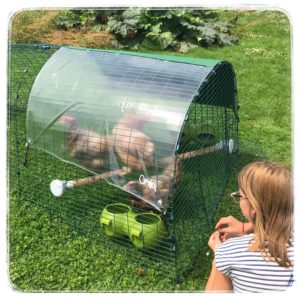
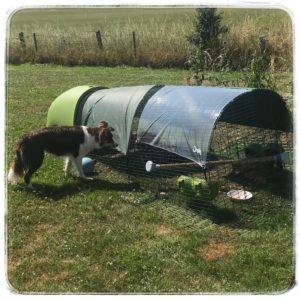
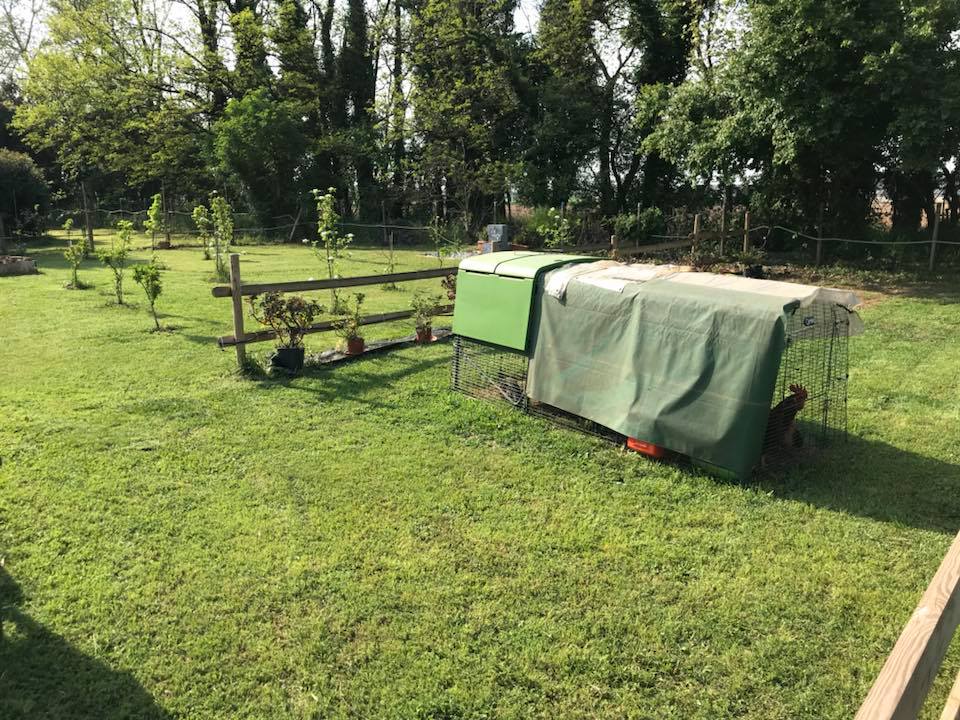
It’s time to treat them against parasites such as lice and worms. We use Diatom Earth, a natural product used against all kinds of parasites. They need to be quarantined first. For this, we give them a temporary home in our Eglu Classic from Omlet. It has a 2 meter run and we can easily move it around in the garden so they have access to fresh grass every day. It’s also very easy to clean. We lift the chickens out of their cage and watch carefully how their feet touch the grass for the very first time. They seem surprised and for a few minutes they just stand still, until one hen realizes she can, and is allowed to, move. Slowly but surely, they cautiously start to explore their run. While the children are watching the chickens, I add the first dose of medication to their drinking water. We use Avimite, a product against lice and mites. The first week they need this on a daily basis, then weekly for the next five weeks. They soon find their water and it looks like they haven’t had any for days. Usually we don’t feed our chickens layers pellets so I had to buy them, because this is the only thing our new chickens have ever had. In the evening we help the chickens into their Eglu where they can safely spend the night.
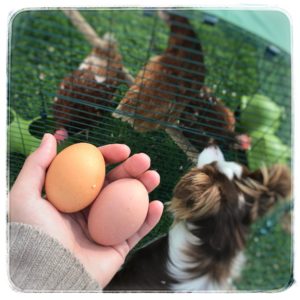
When I open the coop the next morning they don’t want to come out. After an hour we get them out of their coop and notice they have already laid three eggs, one in the nesting box and two on the roosting bars. Because of the medication, we cannot eat their eggs for the next few weeks. Sad, but we just don’t want to take any risk. We have to discard them.
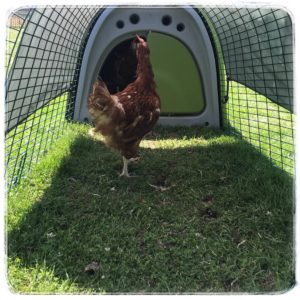
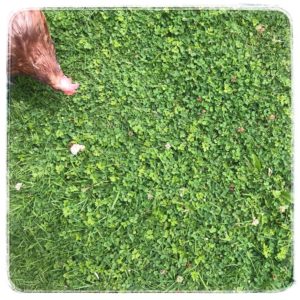
The rest of the day the chickens sit outside. They eat clover and grass for the first time and seem to realize this is not bad at all. The second and third night we have to help them into their Eglu, but from then on they finally realize that this is their new home. In the morning they come outside when I open the door and after a few days they only use the nest box to lay their eggs. Their eyes are getting brighter and they start to establish the pecking order. They are more lively than the first few days, but still nothing compared to our other chickens. Although they aren’t afraid anymore when we come near, they don’t allow us to touch them. This is hard for the children who want to cuddle them to make them forget their past. But the chickens first have to get used to their new environment, to us, and to their new life.
Week 2
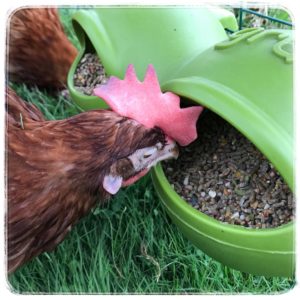
We only have to repeat the red mite treatment once a week now and we can start with the deworming. This treatment, which they need five days in a row, can also be added to their drinking water. The hens give us two to three eggs every day. It’s now time to gradually change their diet. They are used to their new home, they’re not scared anymore when we come near or when our dog wants to sniff at them. They clearly defined their pecking order. We want the very best for our animals, and this also includes a rich and varied diet. Our chickens get Garvo but our 3 laying hens need something extra, a mineral and vitamin boost. We give them Alfamix, a very rich grain mixture with pellets and amphipods. But when I mix this with their layer pellets, I notice that they only eat their pellets and not the new food. They do eat a lot of grass and clover. Slowly but surely their combs are getting redder.
During the weekend, our youngest daughter decides it is time for them to free range in the garden. They love it, and really enjoy the dust baths. But trying to get them back into their Eglu is less enjoyable. Finally they decide to go back into their home. Our daughter has learnt that they are not ready to discover the great outdoors just yet…
Come back in a couple of weeks time to read part two of the diary!
Thinking about keeping backyard chickens for the first time? You’re not alone. With so much information out there, it can feel overwhelming to know where to start. That’s why we’ve created this easy-to-follow chicken checklist, designed to help you confidently set up your flock. We’ll cover everything you need to know about choosing the right chicken coop, run, enrichment, weatherproofing, feed, bedding, and cleaning. Let’s make your chicken-keeping journey simple and enjoyable.
Chicken Coops for Beginners
Your chicken coop is the heart of your flock’s home. The right coop depends on how many chickens you plan to keep, but there are a few essentials every beginner should look for:
Easy to clean
Durable and weatherproof
Predator-resistant
Plastic chicken coops are a fantastic choice for beginners. They’re simple to clean, don’t harbour red mites like wooden coops, and offer excellent weather protection. Wooden coops, while traditional, require frequent maintenance, are not waterproof, and often become breeding grounds for mites.
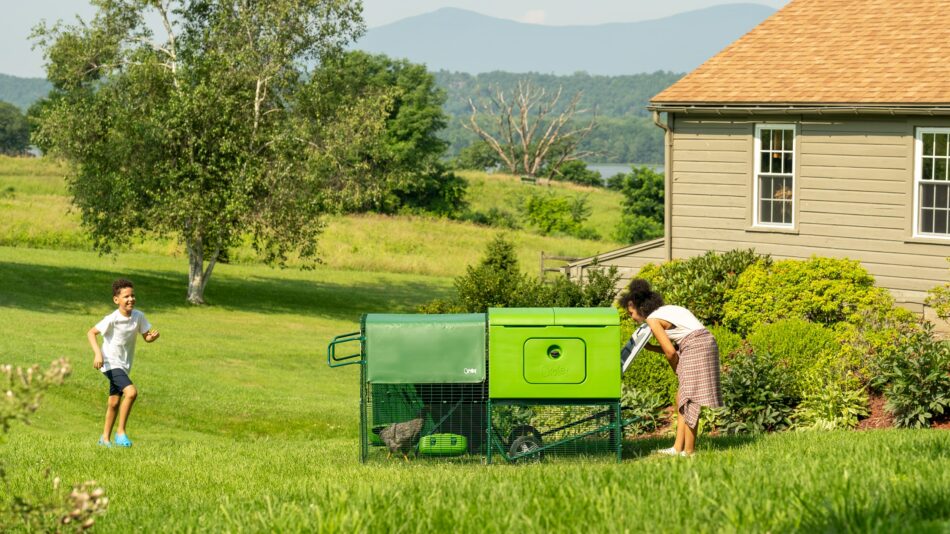
If you’re just starting out, the Omlet Eglu is ideal. The Eglu Go and Eglu Go UP are perfect for 2 to 4 chickens, making them great for small flocks. These coops can be cleaned in just five minutes, keep your hens safe, warm, and dry, and require zero maintenance. If you think you might want to expand your flock in the future (and trust us, “chicken math” is real), consider the Eglu Cube, which houses up to 6 large hens, or the Eglu Pro, which can accommodate up to 10.
All Omlet coops come with pull-out droppings trays, nesting areas, roosting bars, and a back door for easy access. The Eglu Cube and Eglu Pro also feature separate Egg-port doors for even easier daily egg collection.
Chicken Coop Runs
A secure chicken run is just as important as the coop itself. Your run should be made from strong materials to keep predators out and provide enough space for your chickens to roam.
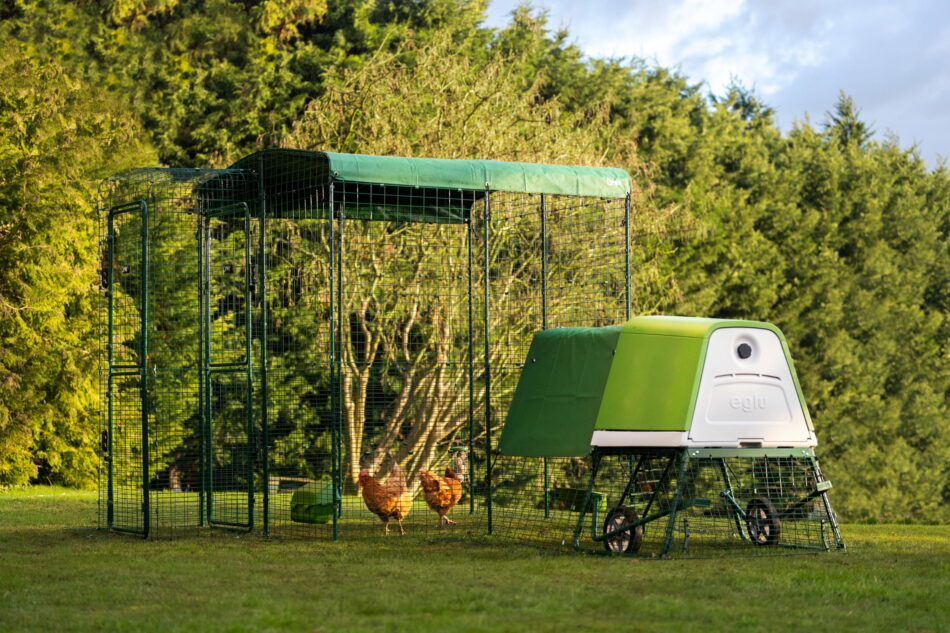
Omlet’s attachable coop runs are designed with anti-tunnel skirts to stop predators from digging in, and strong steel mesh that prevents break-ins. These runs are extendable, so you can add more space as your flock grows.
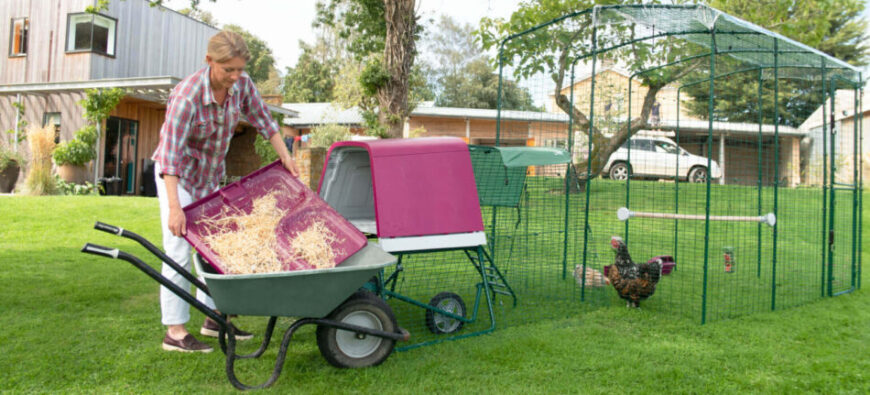
For even more room, consider a walk-in chicken run. These runs are tall enough for you to enter, making it easy to spend time with your chickens and clean the space. You can place your Eglu or a wooden coop inside, or attach your Eglu to the outside.
If you want your chickens to free-range but still keep them in a specific area, chicken fencing is a great solution. While not predator-proof, it helps protect your garden and keeps chickens where you want them. Use fencing when you’re at home to supervise your flock.
Chicken Enrichment
Chickens are curious and intelligent creatures that need enrichment to stay happy and healthy. Without stimulation, they can become bored or develop unwanted behaviours.
Here are some enrichment ideas for your flock:
Perches: Chickens love to roost and feel safe when elevated. Add perches at different heights in the run.
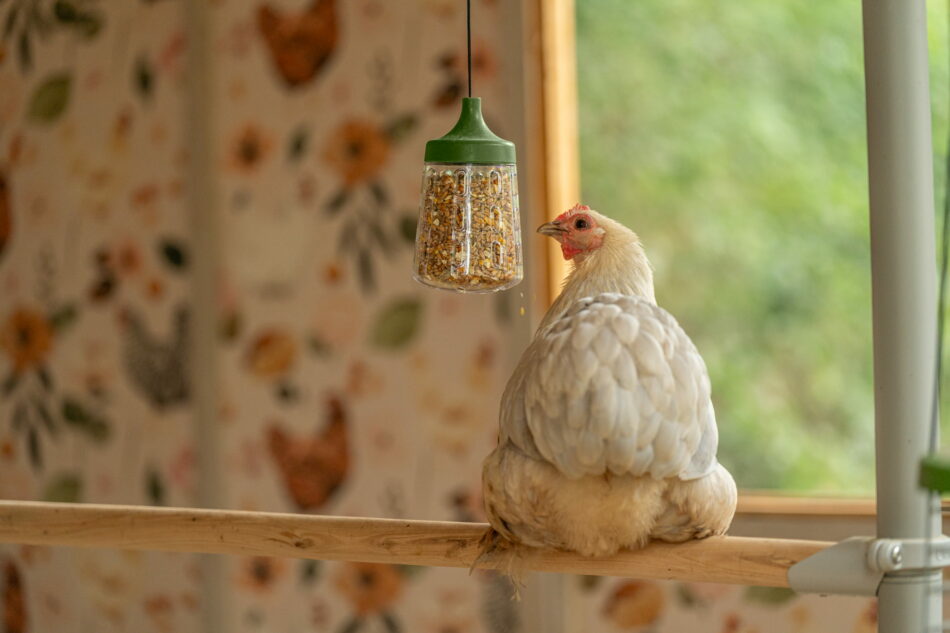
Peck toys: These toys slowly release treats as chickens peck, keeping them entertained and the run tidy.
PoleTree chicken perch: For larger runs, a PoleTree offers perches all the way up to the roof, creating a fun playground.
Hay bales: Toss a bale of hay into the run and watch your chickens forage for bugs and pick it apart.
Chicken swing: Give your flock a new perspective and a fun place to perch.
Enrichment not only keeps your chickens busy but also encourages natural behaviours and reduces stress.
How to Weatherproof a Chicken Coop
Protecting your chickens from the elements is essential for their health. Moisture inside the coop can lead to respiratory problems, so choosing a weatherproof coop like an Eglu is important. Wooden coops tend to absorb moisture and can start to leak over time.
To keep your chickens comfortable year-round:
Use run covers to shield your flock from snow, wind, and rain, allowing them to explore outside in any weather.
In spring and summer, provide shade by adding covers over the run to block the sun and keep your chickens cool.
What Chicken Feed Is Best?
Feeding your chickens the right diet is key to their health and egg production. Laying hens need layer pellets, which contain the protein and nutrients they require.
Offer about 120g of pellets per chicken per day.
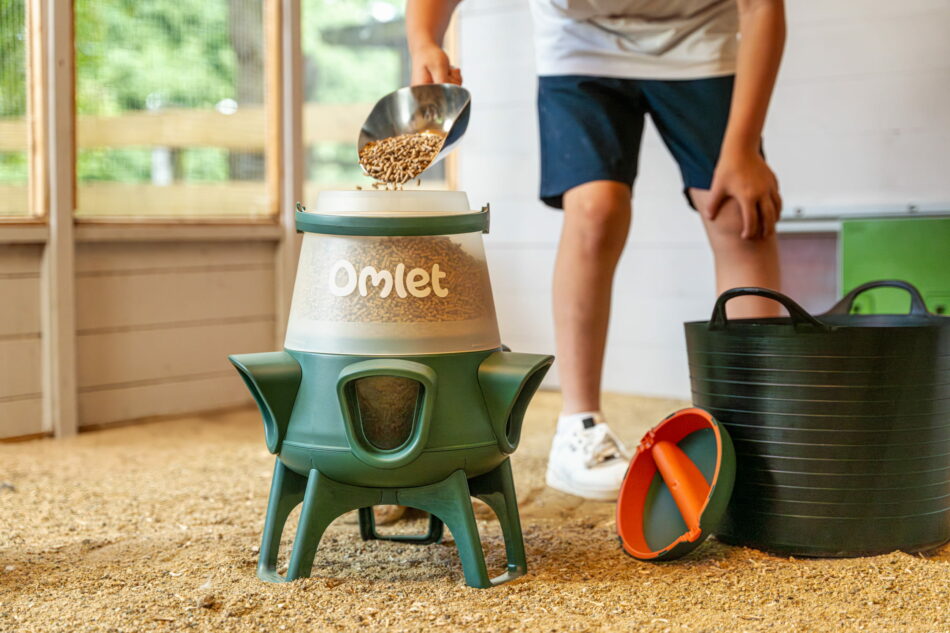
Use a feeder with a viewing window so you can easily monitor feed levels and ensure your chickens always have access to food.
Chickens are messy eaters so use a no spill chicken feeder to keep your run clean and prevent waste.
Provide poultry grit to aid digestion, as chickens don’t have teeth.
Treats like corn are fine in moderation but are high in fat.
Offer fruit and green veggies sparingly so your chickens don’t fill up on these instead of pellets.
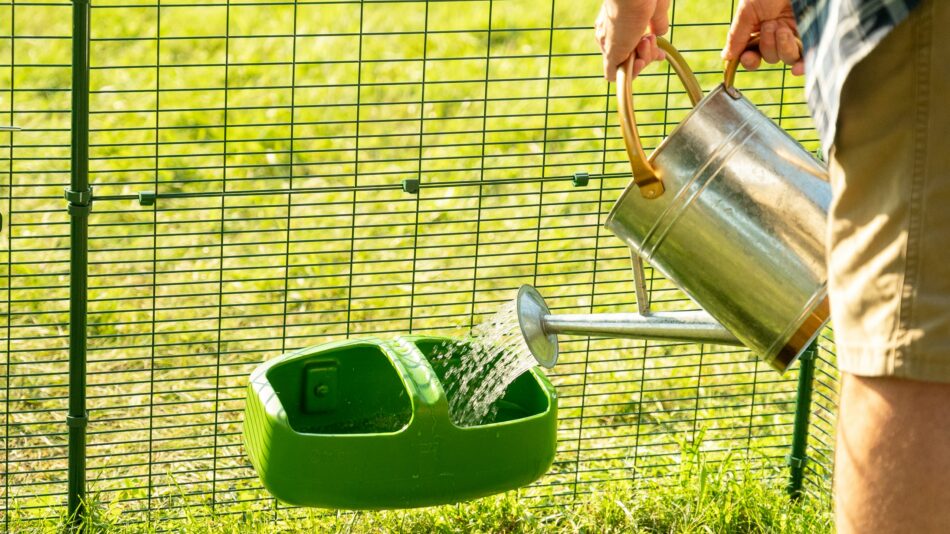
Water is essential. Each chicken should drink about a pint of water daily. Check and refill their waterer regularly. In winter, check for ice several times a day. In summer, make sure the water stays cool, or use an insulated waterer to keep water at the right temperature all year round.
What Is the Best Chicken Bedding?
Choosing the right bedding helps keep your chickens comfortable and healthy.
Dust-extracted pine wood shavings are popular for their absorbency and insulation.
Chopped straw is another comfortable option.
Avoid hay, as it can become mouldy.
Avoid cedar shavings, which are toxic to chickens.
Steer clear of sawdust and fine wood dust, which can harm respiratory health.
Add extra bedding in winter to help your flock stay warm.
How Do You Clean a Chicken Coop?
Regular cleaning keeps your chickens healthy and your coop fresh.
Empty out droppings, spot clean the nesting area, and brush off roosting bars at least once a week.
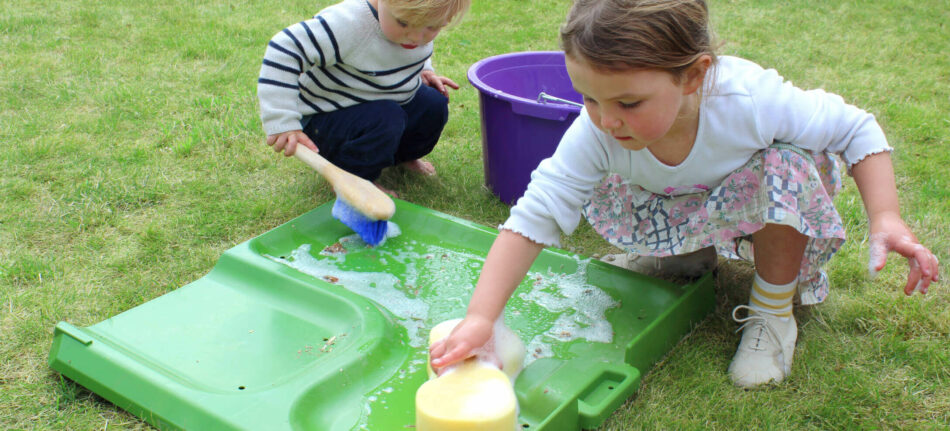
Do a deep clean once a month: scrub and wipe down every surface, and let the coop dry completely before adding fresh bedding. Plastic coops wipe down and dry off much quicker than wooden coops, making them an attractive choice for ease and speed.
Use a natural cleaner like a white vinegar and water solution, or a chicken-safe disinfectant.
Scrub brushes are helpful for loosening stubborn dirt and droppings.
Clean feeders and waterers weekly or each time you refill them. Some waterers can fill with dirt quickly and need cleaning every day. Opt for a stay clean chicken waterer so you don’t have to worry.
Keeping up with cleaning not only benefits your chickens but also makes your chicken-keeping experience more enjoyable.
Use dust-extracted pine wood shavings or chopped straw for bedding.
Stock up on chicken-safe cleaning supplies to keep the coop fresh.
Omlet and Your Flock
At Omlet, we have everything you need to start your chicken-keeping journey, from coops and runs to enrichment toys and cleaning supplies. Our range of accessories will keep your chickens happy and healthy, and we’re here to support you at every stage of your chicken-keeping adventure.
On average backyard chickens live to an age of six to eight years, but there are of course exceptions. How old a chicken will become depends amongst other things on the breed and how a chicken is kept. Heavy layers exhaust themselves with a lifespan of just three years, others can live up to ten years. According to the Guinness World Records world’s oldest chicken is Matilda, a Red Pyle hen from Alabama that died at the age of sixteen (1990-2006). A hen is considered a senior around the age of five. If you are not sure about the age of a chicken, there are signs that will tell you your hen is getting older.
As a chicken gets older the texture of the comb will slightly change and she will likely have some scars from being pecked by other chickens. The feet and legs tend to thicken and if your hen has spurs, you know she’s not a youngster anymore (generally chickens grow spurs around three years of age). Arthritis may cause your older chicken to move stiffly and you might notice she walks a bit slower and more carefully. And of course the egg production of an older hen will decrease. The average chicken lays eggs for four to five years on a regular basis, with the peak of the egg production around 18-24 months. Already after two years, the egg production tends to drop. When you start seeing soft or thin-shelled and misshapen eggs, you know your hen is about to retire from egg laying altogether. But with most breeds living to age seven or beyond, you’ve got a few more years to enjoy the companionship of the hen that has served you and your family so well.
CARING FOR OLDER CHICKENS
Caring for older hens isn’t difficult and really isn’t much different than caring for them when they’re younger but there are a few things you can do for them to make sure they are healthy and comfortable.
Lower the perch in the run and/or coop Senior chickens can start having mobility problems due to arthritis or joint inflammation. By lowering the height of the perch to one or two feet off the ground it’s easier for your old hen to hop onto it, protecting her joints. Building a ramp up into the coop might be necessary.
Predator proof run Old chickens don’t move as fast as they used to. Providing them with a predator proof space is important to keep them safe. It’s best to supervise your chickens when they are free ranging. You may want to provide your older chickens with a separate coop and run to prevent younger, more aggressive hens from pecking them.
Accessible food and water Make sure food and water containers are easily accessible. This means the food and water containers must be on an easily accessible height. It can also be a good idea to have two sources of food and water: one in their run area and if they are free ranging one outside. Older chickens may not be able to range as far for food and water.
Feeding older hens If your entire flock is older and none of the hens are laying any longer, you can give the whole flock a chicken grower feed since they don’t need the additional calcium that a layer feed provides. If you are feeding different age groups together or add new chicks to the flock, the entire flock can be fed the chicken grower feed from the time the new chickens are eight weeks old up until the laying age of 16 to 18 weeks old. After that the new layers will need a laying feed. The layer feed won’t hurt the older hens, as the calcium is good for their bones.
Nail clipping Older chickens may not be wearing down their nails with activity like foraging and scratching. If the claws are curling round then they will need trimming. Consider nail clipping as part of caring for old chickens if your chickens have long nails.
A good vet Try to find a vet near you who specialises in poultry. Do this and register in advance of having problems. Arthritis, egg failure, joint inflammation, gout, ascites, tumors, adenocarcinoma and salpingitis are issues that can come up with chickens of any age, but more so in old chickens.
BENEFITS OF OLDER HENS
In their own way, older hens contribute well past their productive egg laying years. Older hens still produce manure, which is a great fertilizer for your garden. Older hens still like to eat bugs. You’ll notice a reduction in the number of ticks and snails in your garden when you keep a flock of chickens. Furthermore, older hens are more likely to go broody and be available to raise the chicks you purchase or hatch.
Did you know that chickens can’t sweat? Instead, chickens use their legs, combs and wattles to lead heat away from their bodies. They also pant and spread their wings to get some air through those feathers. Chickens also enjoy lying down in the shade when it’s very hot, and of course, they drink lots of water. Did you know that it is actually easier for chickens to keep themselves warm in winter than it is for them to cool down during the summer? It isn’t just an issue of comfort either – chickens can die of heatstroke. Since chickens have a hard time cooling themselves down and when it gets extremely hot they rely on you to help them. So, what can you do to help your chickens keep cool in the summer heat? Here are our 7 top tips.
1. Warm weather means plenty of water
Eggs consist mainly of water, so producing an egg absorbs a lot of water from a hen’s body. Drinking cool water is also one of the main ways chickens cool themselves down. Your chickens will therefore need lots of fresh, clean and cool water in the heat of the summer. It’s best to change the water every day to make sure they have this. It’s also a good idea to provide several water sources so all your chickens can drink at the same time and avoid fighting for access.
Another way you can use water to help your chickens cool down is by providing some shallow pools where they can dip and cool their feet and legs – remember, this is one of the areas where heat leaves their bodies. Try filling some shallow bowls or tubs and leaving them around in the run or your garden. If your chickens don’t like to stand directly in the water you can try placing a brick in there which will be cooled by the water and the chickens can then stand on top of it.
2. Soak up the shade
It’s absolutely essential to provide shade for your chickens and even more so when it gets really hot. If you let your chickens free-range in the garden they might be able to find shade under trees and bushes but in any case, it’s a good idea to provide shade in the run as well. You can easily create shady spots in the run by having a raised coop and/or attachingchicken run covers.
3. Summertime snacking
Try giving your hens some cool treats such as frozen berries, vegetables or pieces of fruit. You could even create hanging treats by freezing your chickens’ favourite treats in theCaddi Treat Holder or an ice cube tray with a string in the middle so they can hang in the run. Or, try keeping a whole watermelon in the fridge to cool it down before serving it as a summery treat.
Be careful not to give your chickens too many treats though, as you want to make sure they still eat their layers pellets. Chickens eat less when it’s extremely hot because digestion produces more body heat, so it’s important to make sure they eat the right things and get the vitamins and minerals they require. Try feeding your chickens during the cooler parts of the day such as in the evening.
4. Nutritional supplements
It’s also wise to give your hens supplements in the heat such as vitamins and tonics which can be added directly to their food or water. These can improve the absorption of minerals, boost your chickens’ overall health, and help them cope better with the heat. Apple cider vinegar, for example, can help with calcium absorption in the body which is essential for eggshell production.
5. Dust bath galore
Chickens love todust bathe in the warm weather, but you might not want them scraping around in your flower beds. The best thing to do is to build another flower bed and fill it with some sand, soil and some louse powder. If you have a large flock you might even want to provide several spaces so all your chickens have a chance to dust bathe in the shade. Be sure to place the dust bath in a sheltered spot or cover it up when your chickens aren’t using it otherwise the rain might turn it into a mud bath.
6. Give them space
Your chickens will need plenty of space during the hot summer months so make sure they aren’t overcrowded. Chickens need to be able to spread out and spread their wings for ventilation, and everyone in the flock needs to be able to drink cool water and lie in the shade at any time.
7. Keeping the coop cool
AllOmlet Eglu chicken coops have a unique twin-wall insulation system which works similarly to double glazing. This means your hens won’t overheat in the summer. The Eglus are also built with a draught-free ventilation system, carefully designed to avoid air blowing directly over the roosting area whilst allowing fresh air to circulate.
If you have a wooden chicken coop, it’s important to think about how you can keep the coop nice and cool for your chickens. Make sure you create plenty of ventilation either by opening windows in the coop or by using a fan. Be careful not to have too much thick and heavy bedding as it absorbs heat. Also, keep an eye out for mould if you’ve got a wooden coop. Mould can make straw and hay start to rot faster, thereby producing more heat.
Omlet and your chickens’ summer
At Omlet, we design products that are built to last a lifetime and thrive in every season. From our OmletEglu Chicken Coops to ourCaddi Treat Holders, our innovative creations mean happy owners and even happier pets. We wish you and your chickens a lovely summer.
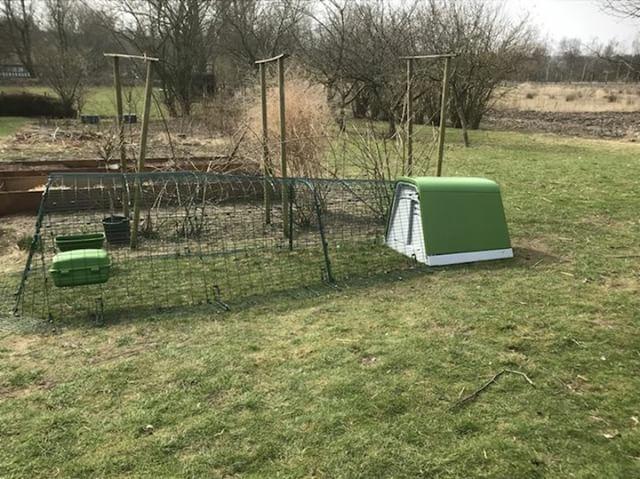
I’ve been lucky enough to be allowed to test the Omlet Eglu Go. Over the spring and summer I’ve first had a brood of chicks and later a brood of ducklings living in my Eglu Go.
The house is awesome to use as a broody coop and for raising chicks. The house is easy to clean, has good draught-free ventilation, it has a good size for chicks and ducklings, and the attached run gives great protection for the little ones early on, when they are very exposed in relation to birds of prey and other unwelcome guests.
Eglu Go for raising chicks
At first, my chicks were living in a cage in our guest room. They were hatched using an incubator and needed a chick brooder in the first few months as it was very cold outside. When the temperatures started to rise and the chicks had more well developed feathers, I moved them out into the coop. I kept them here for about 10 weeks. There were 10 chicks and they fitted easily in the coop until they were large enough to move into the large chicken coop with the grown-ups. I removed the roosting bars in the coop since small chicks don’t sleep on roosting bars in the beginning. I filled the coop with a generous layer of wood shavings and straw since it was still cold in the spring.
The coop is pretty easy to move around, especially if you add the wheels. You can therefore move the coop and run when the grass starts to get dull, this way, the chicks always have fresh grass to walk around on. It’s great to have a closed run for the first while. Small chicks are exposed to birds of prey – this run keeps the birds from attacking. My grown hens were also a danger to the chicks in the beginning. Chickens aren’t always hospitable when it comes to new members of the flock. The small chicks could be left in peace in their run and the big hens could slowly get used to their presence. This made it so much easier to introduce them later, since they were already used to each other.
Hatching and rearing in the Eglu Go
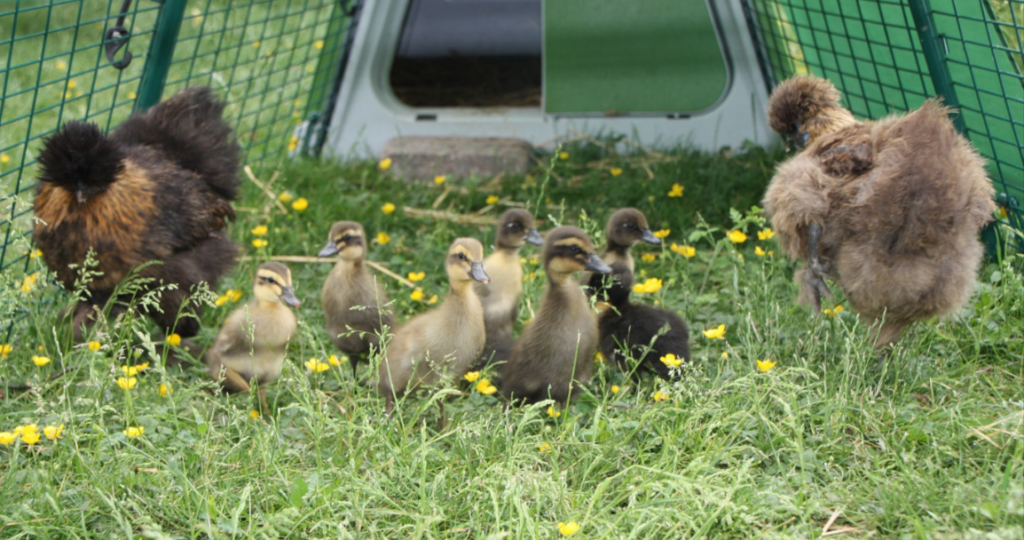
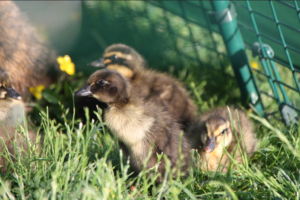
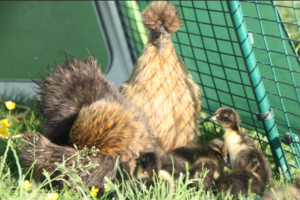
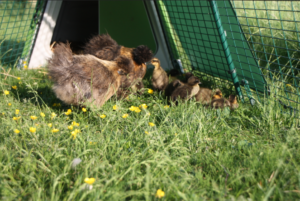
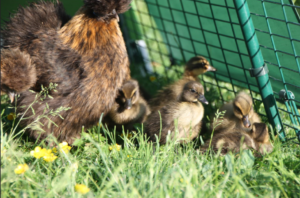
When the chicks were too large to all live in the coop, I introduced them to the large flock, and then I suddenly had an empty Eglu Go. My ducks had laid a lot of eggs in a large nest but none of them were interesting in brooding. I already had two broody silkies, so I tried putting the duck eggs under them. The chickens weren’t discriminative about the eggs, and they happily lay brooding.. About a week before the eggs were supposed to start hatching, I moved the two hens and their eggs into the empty Eglu Go. The hens were very good about it and continued their persistent brooding, a week later 8 large ducklings came into the world.
Again, I had removed the roosting bars from the coop since ducks don’t sleep on roosting bars. This way, there was also room for two nests. The hens got along fine and they didn’t seem to mind that their babies had webbed feet rather than chicken feet.
Again, the other poultry in the garden could slowly get used to the new arrivals, and for that reason, there were also no issues when, a few weeks later, I let the ducklings and their mothers out to join the others in the garden.
The benefit of having ducks in an Eglu Go is that ducks often prefer to sleep outside. At night I let them into the run attached to the Eglu Go and close the run door so they are protected from predators. At the same time, they can decide for themselves whether to sleep in the coop or out in the run. In the morning I open the run door, so they can run freely in the garden and collect slugs, snails and insects.
I can definitely recommend this coop both for chicks and ducklings, whether hatched naturally or in an incubator. It’s a good idea to choose the 3 meter run, since it gives the little ones more space to play and explore.
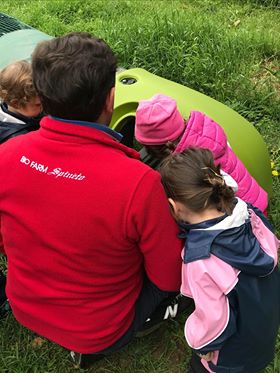
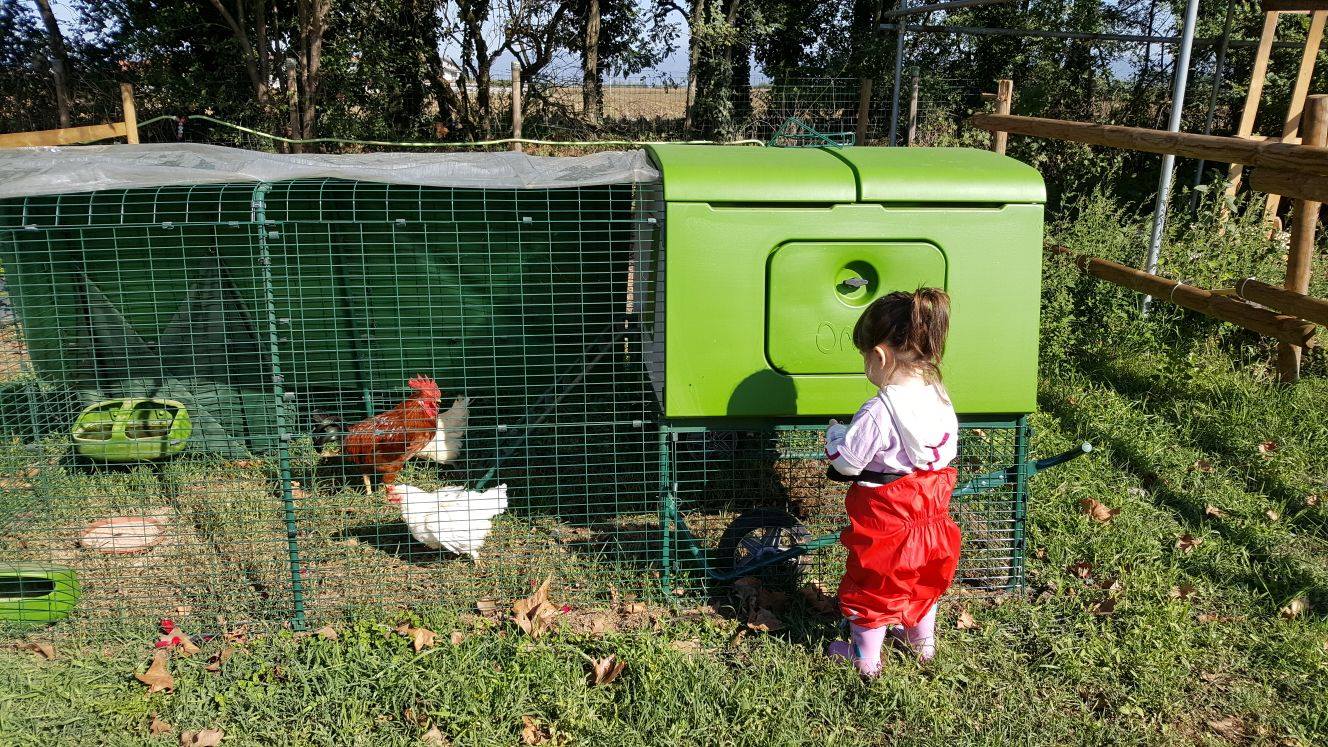
A school in Italy, ‘Agrinido e Agriasilo Montessoriano Al Nido dell’Aquila’ has recently bought an Eglu Cube and Eglu Classic Chicken Coop for their educational programme on nature and pet caring.
We spoke with Mr Colombo’s about their new exciting project.
“Our farm with vegetable garden area produces fruit and vegetable and has recently added a nursery and a kindergarten following the Montessori method.
According to the Montessori method, the outside space needs to be prepared and organised as well as the classrooms inside the building. Therefore, we created and equipped an area of our farm for the purpose of having children grow and care for the vegetables and also the pets (chickens and tortoises).
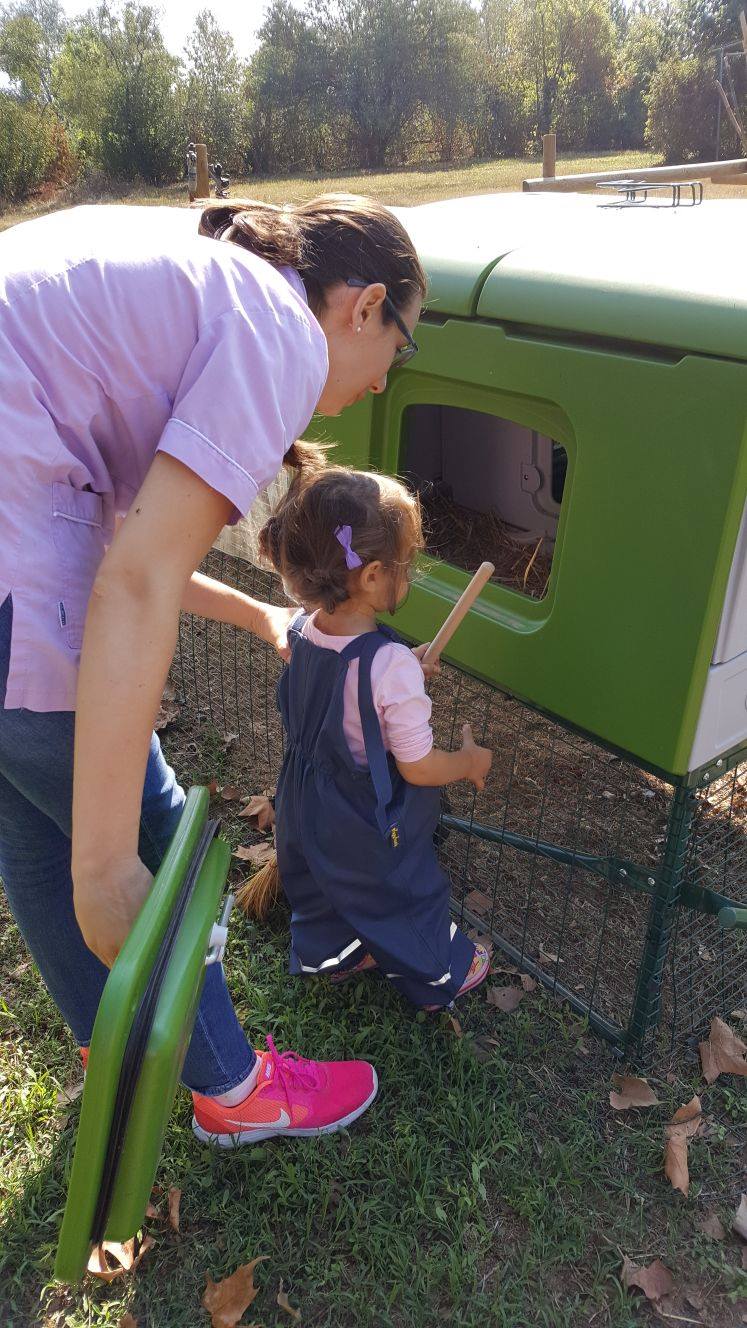
We wanted our little students to care for their own chickens for different reasons: firstly, to teach them how to care for another living being, and secondly, for the daily exiting reward of getting delicious fresh eggs. Moreover, chicken- and pet-keeping has been a valuable starting point to teach numbers to the children, not to mention that the eggs were perfect to paint and use as Easter decorations!
In order to assure that our students had the best and most educational experience, we needed something practical, clean and safe. In addition, it has to fit in the 55sqm we dedicated to the project. We decided to choose an Eglu Chicken Coop as, compared to regular wooden coops, plastic was easy to clean, highly hygienic, wouldn’t rot and would last for a very long time.
We decided to opt for Omlet’s Eglu Cube, as we valued the possibility to move the coop regularly. We move our Eglu every Saturday, in order to allow our chickens to enjoy new fresh grass every week. We were pleased to discover that one person can easily move such a big coop alone thanks to the wheels.
The size of the coop was also essential: it has to be accessible by small children. The Eglu Cube features a lateral door for easy access to the nest and eggs which is at the perfect height even for 2-year-old children. Thanks to this, our students can easily collect eggs in complete autonomy.
After a year, we wanted to expand the program and we bought another coop, the Eglu Classic, which we use to keep chicks. Keeping chicks helps children learning about time flowing and the phases of life from the egg incubation, to hatching and growing, and the patience necessary to wait for all these changes to happen.”
A familiar problem for both backyard chicken keepers and commercial farms lies in how to prevent and treat infestations of the birds’ environment with red (poultry) mites – also known as dermanyssus gallinae. Compared to other poultry parasites such as fowl ticks, lice and flies – mites are by far the most common, destructive and difficult to remove. Red mites are nocturnal parasites and hide themselves in gaps and cracks during the day, laying wait to wreak havoc on your flock at night.
Signs and diagnosis
Red mites are up to 1mm in size. The title “red” has been given to these mites because they turn from gray to red after they have had a blood meal. Infected hens will not be the picture of chicken health. Once the infestation becomes significant, your chickens will become anemic. Their wattles and the combs will appear pale and their egg production will drop significantly. Red mites also cause:
Skin irritation
Feather pecking
Weight loss
Restlessness in the flock
Your chickens will also probably be reluctant to go into their coop at night because that’s where the mites are lying in wait.
When checking your chicken coop for red mites, be sure to also check their perches or other chicken coop and run accessories. An easy way to check for red mites is by rubbing a white paper towel underneath the perches at night. If there are red mites, they will be on the underside of the perch after feeding on your chickens – you’ll see red streaks on your paper towel after coming into contact with them.
Prevention
An ounce of prevention is worth a pound of cure. But, when it comes to red mites, that’s sometimes easier said than done. Wild birds or new chickens can transmit red mites to your flock. Check your chickens’ health regularly to make sure all flock members are feeling their best.
It’s also a good idea to check for red mites routinely when you clean your chicken coop and use some preventative measures. Diatomaceous earth as part of the weekly clean is helpful in preventing and killing mites (DE is a 100% natural powder which dehydrates parasites it comes into contact with). All types of chicken coops can get red mites – however wooden coops tend to experience the most infestations.
Unfortunately, red mites can survive for up to 10 months in an empty hen house, so leaving a coop empty for a while doesn’t usually fix the problem. Choosing your housing carefully can help prevent infestations Omlet’s Eglu chicken coops are made from plastic which makes it very difficult for red mites to make a home. And in the event that there is a red mite infestation, they are quick and easy to clean. A quick blast with a pressure washer will be enough to send the mites packing.
6 Ways to treat red mites
1. Cleaning
If you find lots of red mites in the coop, it’s time for a deep clean. This type of cleaning will take several hours with a wooden chicken coop, but significantly less time with a plastic chicken coop. Remove all hens from the coop and strip it down as much as possible. Clean each part individually and allow for the coop and parts to dry completely.
2. Mite disinfectant detergent
Mix a mite disinfectant detergent (such as Smite Professional Disinfectant 1L Concentrate or Barrier Red Mite X 500ml Concentrate) with water (using the manufacturer’s guidelines). Apply this to the coop, ensuring you get it in the cracks and crevices. Omlet’s Eglu chicken coops don’t have these awkward and accommodating spaces, making red mites much easier to control. Concentrate your efforts where there is the highest population of red mites. Leave for 15-20 minutes.
3. High-pressure hose
Use a hose (preferably a pressure washer) to hose down the coop and the parts. Try to get in every nook and cranny, as this is where the mites like to hide. Leave for 10-15 minutes to dry. After this, you will most probably see more agitated mites crawling out. Repeat this process until there are very few mites emerging after each wash. Eglu chicken coops are made of heavy-duty plastic and are designed to be pressure washed with ease. One pressure wash will be enough to eradicate any existing mite population.
4. UV
Leave the coop to thoroughly dry. It’s ideal to perform coop cleanings on a sunny day where UV rays can kill some of the bacteria. Put the coop back together and add bedding. Dispose of the old bedding in a plastic bag in the garbage – red mites will happily find somewhere else to live if given the opportunity.
5. Red mite powder
Sprinkle your entire coop and your chickens with a red mite powder. Ensure you rub the powder onto the perches so that any remaining mites will have to crawl through it to reach your chickens.
6. Repeat red mite powder treatment
Re-apply the red mite powder every couple of days or when it has rubbed off. Red mites are primarily active during mild weather, making peak seasons the spring and fall. They will lie dormant throughout the rest of the year, waiting for their next opportunity to emerge.
Preventing red mites with Omlet
Any chicken coop can fall victim to red mites, but with any easy-to-clean plastic chicken coop, you’ll be able to nip infestations in the bud. Our chicken perches can be removed easily for a thorough cleaning, and our plastic Chicken Swing offers a mite-resistant place to find relief. Don’t fall prey to red mites – take control with Omlet’s chicken products.
Read our handy guide first that has been provided by Sarah from Sussex Garden Poultry ….
What advice would you give for someone looking to keep Chickens?
The most important thing is going to be the coop, choose something that will be safe for the hens, that will last, that’s easy to clean. Spend well, spend once. Buy your hens from a reputable source, it’s easy to be fobbed off with cockerels or older hens if you don’t know what to look for. Buying ‘point of lay’ means they may not be laying yet, but within a few weeks you’ll get eggs, there is no way of ageing a hen, you don’t want to buy something that’s 3 years old.
Which type of Chickens would you suggest to get as a first time Chicken owner?
If you’ve never kept hens before I always suggest you choose a fairly calm type of hybrid. The Red Rangers, Blacktails, Light Sussex & speckled hens. These girls will lay you lots of eggs with the minimum of fuss. Bantams are also a good choice if you have a small garden.
What type of Coop would you recommend?
Always buy the biggest coop you can afford & have space for, hen keeping is addictive, you start with 3 & end up saying, ‘oh I like that colour, that breed, that shape……..’
Omlet sells three different types of Eglu Chicken Coops
How many Chickens would you suggest getting initially?
First think about your coop size, I always recommend starting with 3, the classic & the Go easily take 3 hens, should you have the misfortune to loose a bird you need to add a minimum of 2 hens, these coops have the space for 4 hens max. With the Cube you can take more hens, but remember when you want to add to your flock it’s best to double your numbers, so 4 or 5 in a cube allows you to add again in a couple of years time to keep a year round supply of eggs from new layers.
Should you always keep more than one Chicken?
Chickens like to be in flocks, no one wants to be lonely, why would a chicken?
Have you ever wondered what’s going on in the minds of your chickens?
Chickens have, just like us, full-colour vision. So the colourful Eglus from Omlet will also brighten up your chickens’ day!
Chickens dream just like we do. During sleep they also experience REM (Rapid Egg Movement?). Maybe they dream about all the exciting things they did during the day…
Chickens love to roam around freely, take dust baths, sun bathe and play. Because of this, Omlet have an interesting range of chicken toys and accessories, like the Poppy and Pendant Peck Toys, and the Chicken Swing!
Chickens are omnivores, which means they eat both vegetables and meat. They love seeds and juicy worms, but will also appreciate a small mouse if they come across one.
Chickens are related to the Tyrannosaurus rex. Maybe this is not that hard to believe when they stare at you with a penetrating gaze (trying to convince you to feed them…again!).
There is a word for the extreme fear of chickens, namely alektorophobia. People with alektorophobia can even develop a fear for eggs.
Chickens have an excellent memory. They are able to recognise the faces of more than 100 members of their species, other animals and humans.
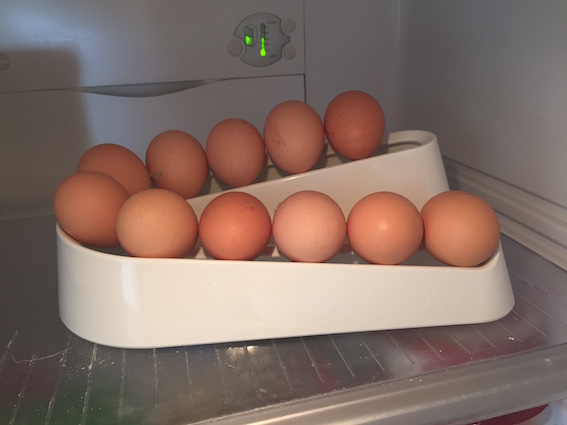
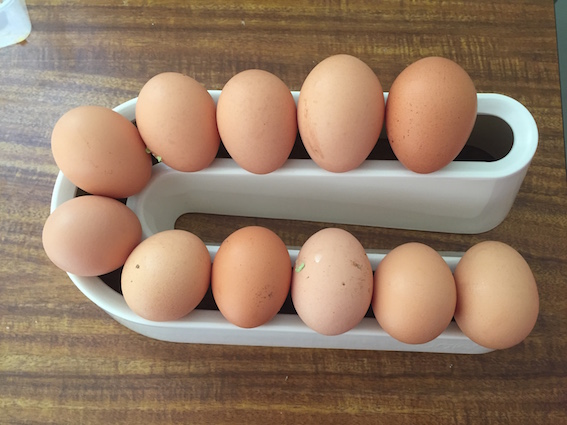
Wild chickens just lay ten to fifteen eggs a year during the breeding season. Battery hens are bred to lay an egg almost every day. To make sure you’ll use the eggs of your hens in date order, Omlet provides the Egg Skelter.
The heaviest chicken egg ever weighed was 340g (as a comparison: an average chicken egg weighs between 55-75g). As chickens get older they will lay fewer but larger eggs.
The colour of the egg does not alter its nutritional value or taste. The reasoning behind different shell colours is that different breeds lay eggs of different colours.
It takes 21 days on average for a chicken egg to hatch once incubation begins, whether you incubate them with an incubator or set them under a hen.
It is very unlikely that an egg with a double yolk will produce a chicken twin. There is too little space in the egg for two chicks to fully develop.
Worldwide there are more than 25 billion chickens (as a comparison: there are less than 7.5 billion people). Chickens are therefore the most common birds on earth.
The red junglefowl (gallus gallus) from Asia is the ancestor of the modern chicken (Gallus gallus domesticus). Chickens were probably already domesticated in the sixth millenium B.C.
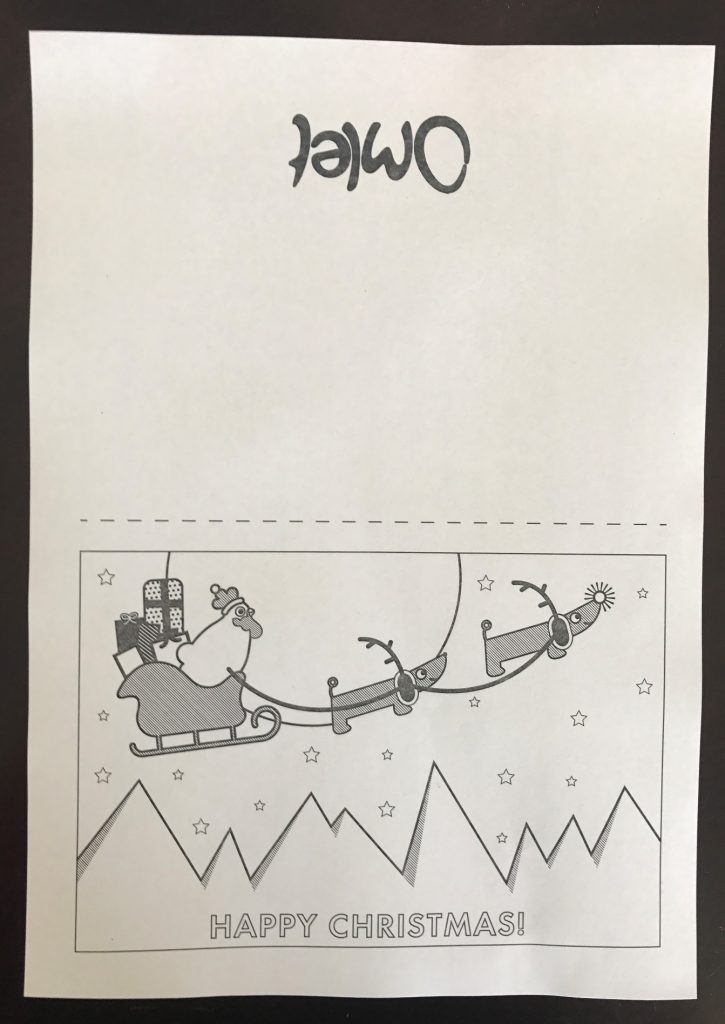
With only 25 days until Christmas we thought we’d give you a little something to keep you and the kids entertained… a Christmas card colouring competition. The great thing about this is that all you need is a piece of A4 paper and pens/pencils and you will end up with a lovely card to give to someone…
Not only can you have fun colouring, but you can also win some eggcellent prizes!
Christmas is coming and with it the dreaded Christmas shopping! To make life easier this year for you we are offering FREE DELIVERY ANYWHERE in Australia when you buy the Eglu Go Chicken Coop or Eglu Go Hutch(more…)
When you talk to most people who are planning to get chickens they talk about wanting them so that they can have fresh eggs daily and yes, that is usually the main reason, but there is more to chickens than their eggs… (more…)
It’s wintery and cold and time to celebrate Christmas in July with Omlet. We have 3 fabulous stockings stuffed with prizes to giveaway PLUS 7 runners-up prizes… (more…)
If you want to collect your order rather than have it delivered you can. Here’s how you do it and some of the commonly asked questions:
1. Decide what you want to order (we’d suggest one of everything!! :))
2. The DAY BEFORE you want to pick up your order, order online or call 02 81034124
3. The day AFTER your order, call the warehouse on 02 8882 5400 to confirm what time between 8am and 3:30pm (Monday to Friday) you will collect your order. Take your order number with you and go to:
ACR Supply Partners 12 Distribution Drive Orchard Hills NSW 2748
Frequently Asked Questions:
Can I collect my order on the weekend? No sorry, the warehouse is only open Monday to Friday 8am to 4pm.
It’s a long weekend are you open on the public holidays? No sorry.
What happens if I am running late, do I need to call and tell Omlet? The warehouse is a third party that we use, it isn’t owned by Omlet, sometimes they are there later than 4pm, but we cannot guarantee it. It is up to you if you still go or if you go another day, you don’t need to let us know.
Can I see any of the Omlet products assembled at the warehouse? No sorry, it is literally just a warehouse with boxes of products in it.
Can I pay at the warehouse? No sorry, there is NO Omlet office at the warehouse and therefore no one to take payment.
Will someone call or email to tell me that my order is ready for collection? Yes, we will email you to let you know you can pick it up. If for some reason it has been a few days and you haven’t collected your order we will probably give you a call to check that you didn’t select collection by mistake.
When I order online it wants my address why is that? You do need to put in your address when you order online even if you are picking it up so that we can check your credit card against your address.
Can I send someone else to collect my order? Yes of course, just make sure they have your name and order number.
Will my order fit in my car? It is best to check on the page of the item you are ordering, at the bottom of the page it will tell you the box dimensions so that you can work out if it will fit.
Do I have to lift the boxes into my car? Usually the warehouse guys will help you, unless they are very busy.
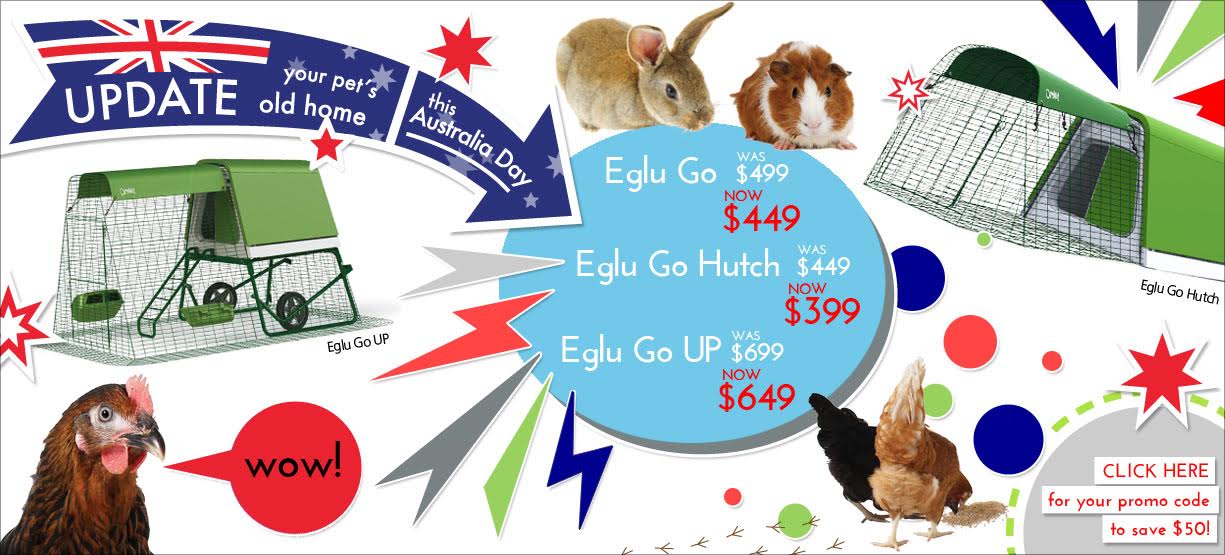
Summer is well on it’s way and with it comes Australia day. If your chickens, rabbits or guinea pigs are feeling a bit fed up with their house this is the perfect time to upgrade it to a new easy to clean house!
Save $50 off all the Eglu Go’s below when you use coupon code: AUSSIE50 at the checkout before 31/1/16
Get $50 off these chicken coops, rabbit hutches and guinea pig hutches with runs when you use the coupon code online before midnight on 31st January 2016.
Please note that the discount does not apply to any orders already placed before the discount started (18/1/16) and the discount cannot be used with any other discount codes. The offer only applies to Australian orders. The discount only applies to house and run packages not the house alone.
You can download the one page information on how to fundraise with your school or kindy for an Omlet chicken coop as a PDF here : Omlet Egg Carton Fundraising 2016-01-07
This is a question I get asked A LOT… The answer is YES AND NO! Have I confused you yet? Well according to my eggpert source, a food scientist eggs can be kept in or out of the fridge. (more…)
 Free returns
  180-day guarantee
  Sign up to our Newsletter


 Christmas is coming and with it the dreaded Christmas shopping! To make life easier this year for you we are offering FREE DELIVERY ANYWHERE in Australia when you buy the