 Free returns
  180-day guarantee
  10% off your first order
 Good food, good feed, nothing wasted: Life with Jude Harper
When we last spoke to Jude Harper, he was building a slower and more grounded kind of life – one wonky project at a time. It clearly struck a chord. People loved his honesty, his humour and his refusal to pretend he had everything figured out.
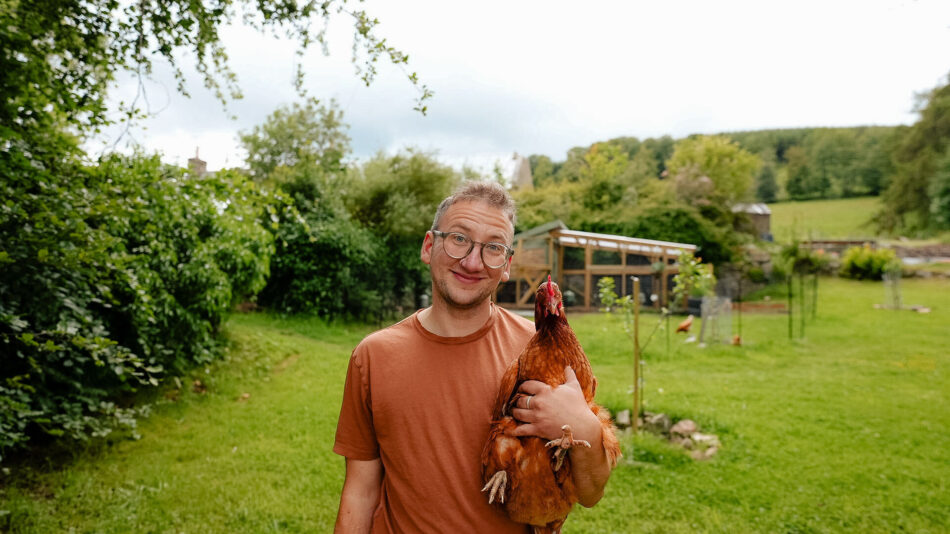
This time, the conversation moved naturally on to what comes next. Because once the chicken coop is built and the hens are happily settled in, you start to notice the systems around them. The everyday details, the little things that make chicken keeping feel easier, cleaner and smarter.
For Jude, that means thinking a lot about waste. What gets used properly, what goes back into the garden, and what definitely shouldn’t be ending up on the floor of the chicken run. That’s exactly why the Smart No Waste Feeder has become such a useful part of his setup.
Anyone who keeps chickens will know they are not known for their table manners. Feed has a habit of travelling: scratched out, pecked around, flicked onto the ground and trampled into the ground. And once that happens, it’s no longer doing the job you bought it for. That’s what Jude appreciates about the Smart No Waste Feeder.
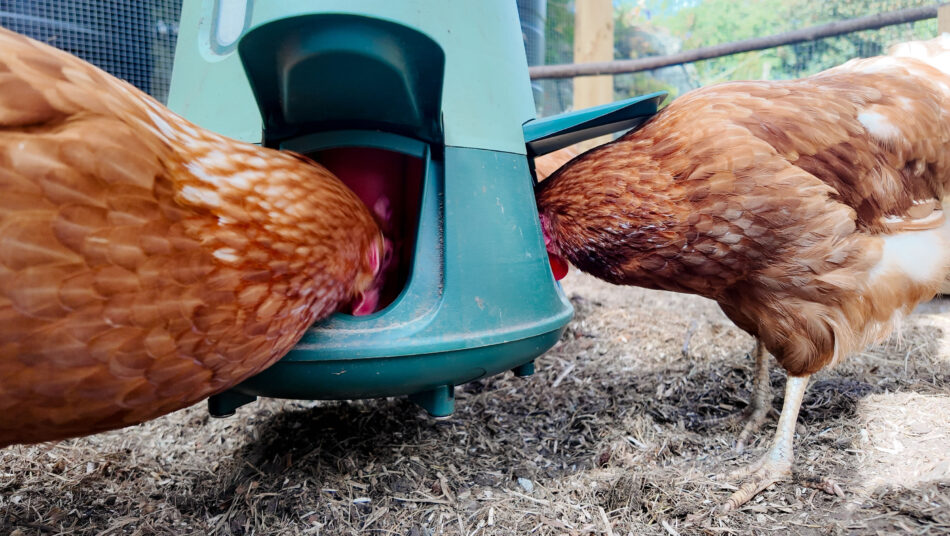
“There’s definitely never anything on the ground underneath,” he says, “which is great, because if you’re buying chicken feed, chickens might as well eat it.” It’s a simple point, but an important one. No waste feeding isn’t just about things looking neat. It means feed stays clean, dry and available to your hens, rather than disappearing into the floor of the run or getting spoiled by the weather.
That practical side matters even more when you think about pests. Feed on the ground doesn’t just create a mess, it can act like a dinner invitation for rats, mice and wild birds. And in the countryside, those opportunists are never far away.
“There are rats in the area because, I mean, it’s the countryside,” Jude says. “My neighbours will say sometimes, ‘Ooh, the rats are back!’” But Jude is quick to point out that the problem hasn’t come anywhere near his chickens: “I haven’t seen any rodents around the chicken coop or feeder… It’s nice to not have temptation lying around.” That really gets to the heart of it. The point is not to pretend wildlife doesn’t exist, it’s to avoid creating the kind of setup that makes your run inviting in the first place.
The design of the Smart No Waste Feeder plays a big part in that. Jude says his hens took to it straight away: “They worked it out really quickly and had no issues whatsoever.” That’s exactly how the best chicken-keeping products should feel – easy for chickens, easy for people, and quietly effective in the background.
He also noticed how the Feeder’s shape helps keep food protected. “Chickens have to kind of get their head in a bit more to get the feed, which is fine if you’re a chicken, but harder, I think, if you’re a rodent or another kind of animal.” It’s one of those clever design details that does a lot without shouting about it. Jude keeps his feeder hanging in the run, which suits his setup and helps keep everything raised off the ground, dry and clean. He also likes knowing it’s one less thing to worry about in the evening: “That’s a job you don’t have to worry about… it’s not tempting anything in the night.”

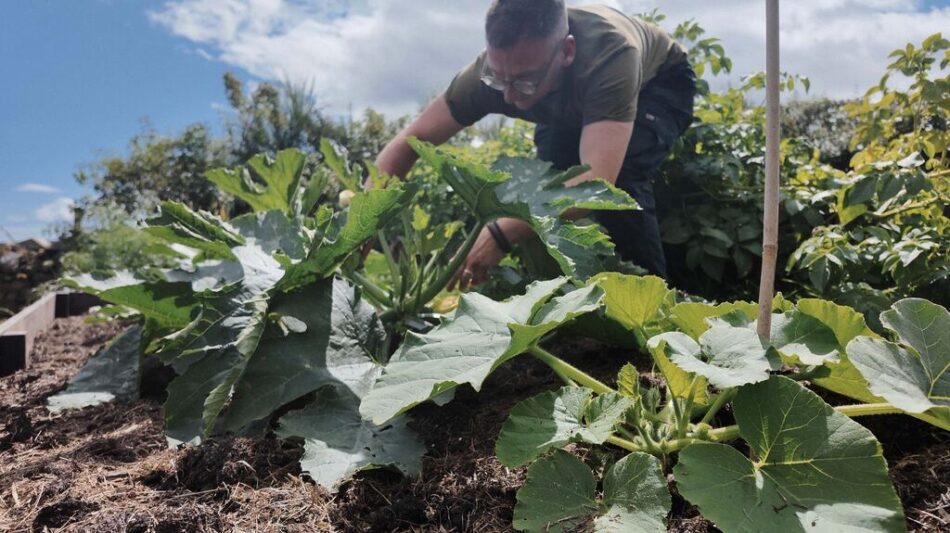
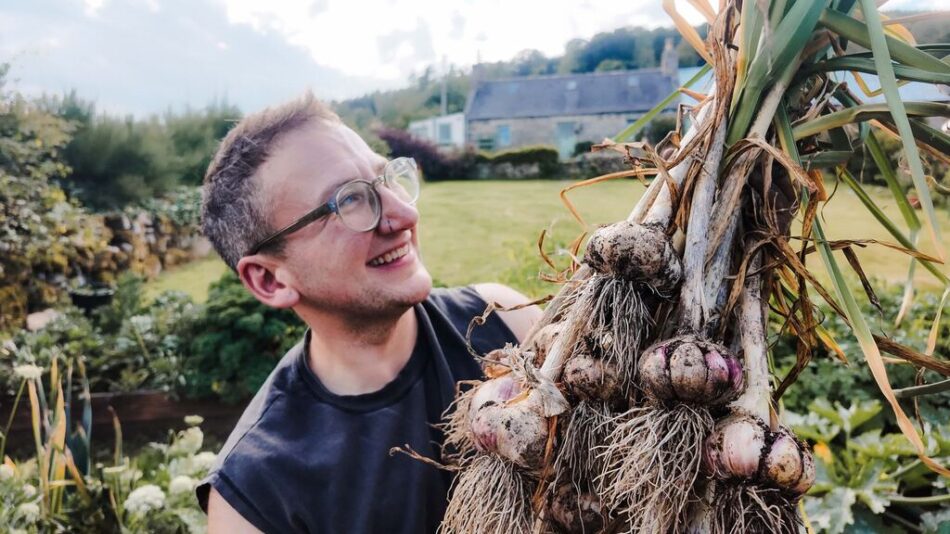
What makes Jude such a natural person to talk to about avoiding waste is that the idea runs through so much of his life already. Long before the chickens arrived, he was composting and growing his own food. What started with pots and a tiny garden has gradually become something much bigger: berries, carrots, onions, garlic, salad leaves, courgettes and whatever else the season allows.
But, as ever, he’s refreshingly realistic about it. “I am not fully self-sufficient,” he says. “I think being completely self-sufficient is incredibly hard to achieve for one household, let alone one person, but I do what I can!” That honesty is part of why his way of doing things feels so approachable. This is not about doing everything perfectly, it’s about making thoughtful choices, building habits slowly and noticing where waste happens.
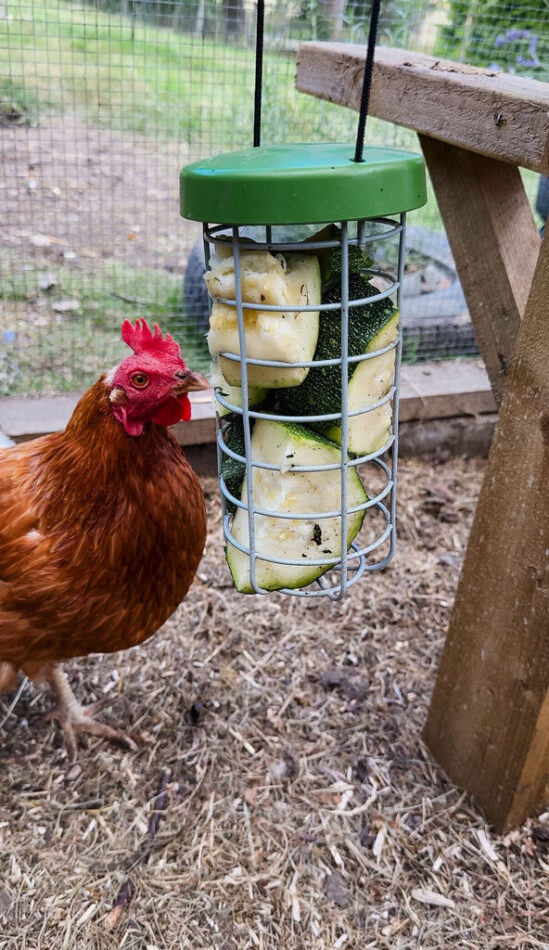
That thinking extends to the chickens too. Some of what Jude grows can go straight from the garden to the run – berries are a particular favourite.
He says his hens love strawberries, redcurrants and blackberries, and homegrown courgettes can go down equally well when they get a bit overenthusiastic in the garden. It all fits into the same wider loop: compost feeding the soil, soil feeding the garden, the garden feeding the household and the hens, and the hens giving something back in return. It’s not polished or performative. It’s just a good, sensible system that makes use of what’s already there.
And that’s really why the Smart No Waste Feeder makes so much sense in Jude’s world. When you’ve put time into growing food, making compost, reusing what you can and learning how to live a little more seasonally, wasted feed starts to feel particularly unnecessary. It becomes part of a bigger picture: using things properly, protecting what you’ve paid for, and not accidentally feeding every passing pest at the same time.
Like the rest of Jude’s story, none of this is about getting it perfect first time. It’s about making one good change, then another, and letting those changes build into something that works. Sometimes that means learning how to grow raspberries or carrots, and sometimes it means choosing a feeder that quietly solves several problems at once. The beauty of the Smart No Waste Feeder is that it does exactly that – it keeps feed where it belongs, helps keep pests away, and makes the whole setup feel more under control.
This entry was posted in Chickens