 Free returns
  180-day guarantee
  10% off your first order
 Flock on the move: Joel Salatin on the benefits of mobile chicken keeping

For farmer, author, and regenerative agriculture pioneer Joel Salatin, chickens can do far more than lay eggs. Given fresh ground to explore, they can help transform a garden or stretch of land, one patch of grass at a time. At Polyface Farm in Virginia, USA Joel has spent decades moving animals across pasture in a rhythm that benefits both flock and land. Chickens get fresh grass, insects, and new things to peck at, while their manure returns nutrients to the soil before the ground is left to rest and regrow.
It’s a big idea with a surprisingly backyard-friendly application. Even on a smaller scale, regularly moving a chicken coop can turn a well-worn lawn into a more interesting, productive space for chickens and a healthier garden over time.
Why keep chickens moving?
For Joel, it comes down to hygiene. “Animals aren’t potty trained,” he says.“They tend to develop a toilet and they tend to walk through their toilet.” Leave chickens on the same patch for too long and manure builds up, which is less hygienic for the flock, and too much nitrogen in one place can overwhelm the grass beneath them.
Moving chickens onto fresh ground breaks the cycle. “The more often you move them, the better, to move them away from yesterday’s manure,” says Joel. “I’m a big believer in daily moves. I just think there’s nothing like it, and it’s the best way ensure hygiene, sanitation and wellness.” A movable coop makes that much easier. All of Omlet’s Eglu chicken coops can be fitted with wheels and handles, so you can reposition the coop and run around the garden without taking the entire setup apart. For the chickens, it is a fresh patch to explore. For the lawn, it is a chance to catch its breath.
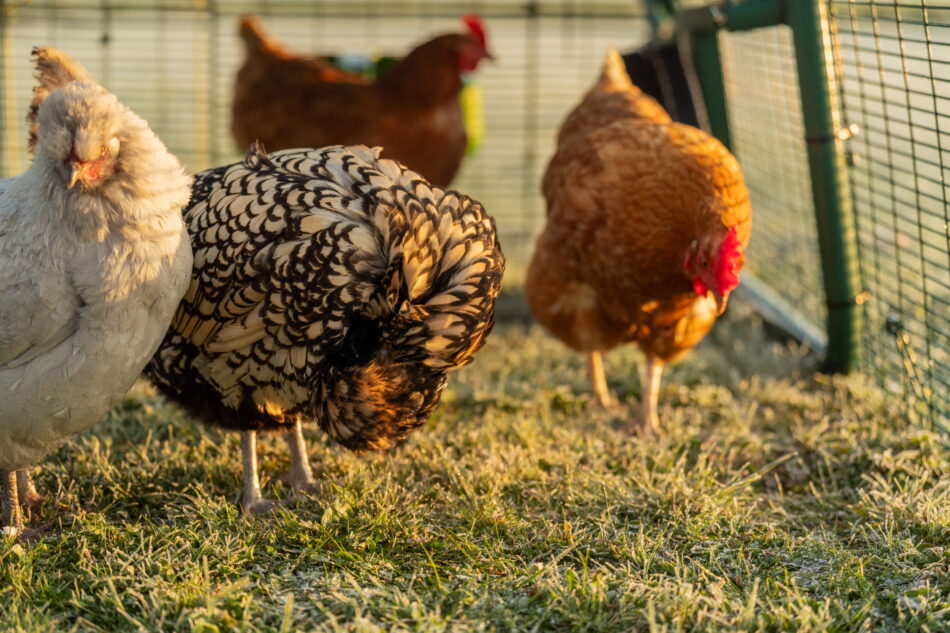
A new adventure, a new salad
Fresh pasture isn’t just about what chickens leave behind, it’s also about what they find when they arrive. “Animals will always eat dessert first,” says Joel. Give chickens a new patch of grass and they will head straight for the good stuff: tasty plants, bugs, seeds, and whatever else catches their eye. Leave them there too long and, as Joel puts it, “they’re then into garbanzo beans, liver and onions.” Moving the flock resets the menu. “Moving them every day provides a new adventure, a new place, a new salad, and away from yesterday’s excrement.“
It is enrichment without needing to overthink it. New ground gives chickens fresh places to scratch, peck, forage, and investigate, which is exactly what chickens like doing best. Joel also points to one change many keepers notice when their hens regularly forage on fresh ground. “The beauty of the pastured egg is the carotenes, the phytochemicals in the grass,” he says. “One thing you’ll notice is the yolks will get darker.” Grass is not a complete replacement for chicken feed, of course. Think of it as the salad bar alongside a balanced main meal.
How often should you move a chicken coop?
There is no one-size-fits-all answer. A small run with several chickens will need moving more often than a larger area with only two or three birds. Joel favours daily moves where practical, but the best guide is the ground itself. If the grass is looking worn, trampled, or heavily manured, it’s time to move before it turns into a bare patch.
It’s just as important to leave each patch to recover for long enough. “You need to rest the land at least 21 days, preferably 30, in order to actually get enough rest,” Joel explains. That gives grass a chance to regrow before the chickens return. It also helps prevent the same ground from becoming a permanent chicken bathroom, which nobody wants.
If you don’t have room to give each patch a proper break, Joel doesn’t recommend endlessly shuffling chickens between the same few tired spots. Instead, he suggests changing the system. “If the space is that tiny, I would go stationary and deep bedding.” A stationary setup needs a genuinely deep layer of bedding, with enough material for microbes to establish and decomposition to take place. Joel suggests more than six inches. The point isn’t that one system is better than the other. It’s about choosing one that works for the space you actually have.
Chickens can work wonders for your lawn
Done well, the relationship goes both ways. The chickens get fresh ground to explore. The ground gets chickens. As your flock moves around the garden, their manure is spread more evenly instead of building up in one spot. “You’ll have the prettiest lawn in the country because you’re painting it with nitrogen,” Joel laughs. “There’s nothing that grows lush grass like a chicken.”
That’s the big idea behind Joel’s approach. Don’t treat the chickens, coop, and garden as separate things to manage. Let them work together. The chickens forage, the ground gets fertilised, the grass recovers, and then the flock comes back to a fresh new patch.
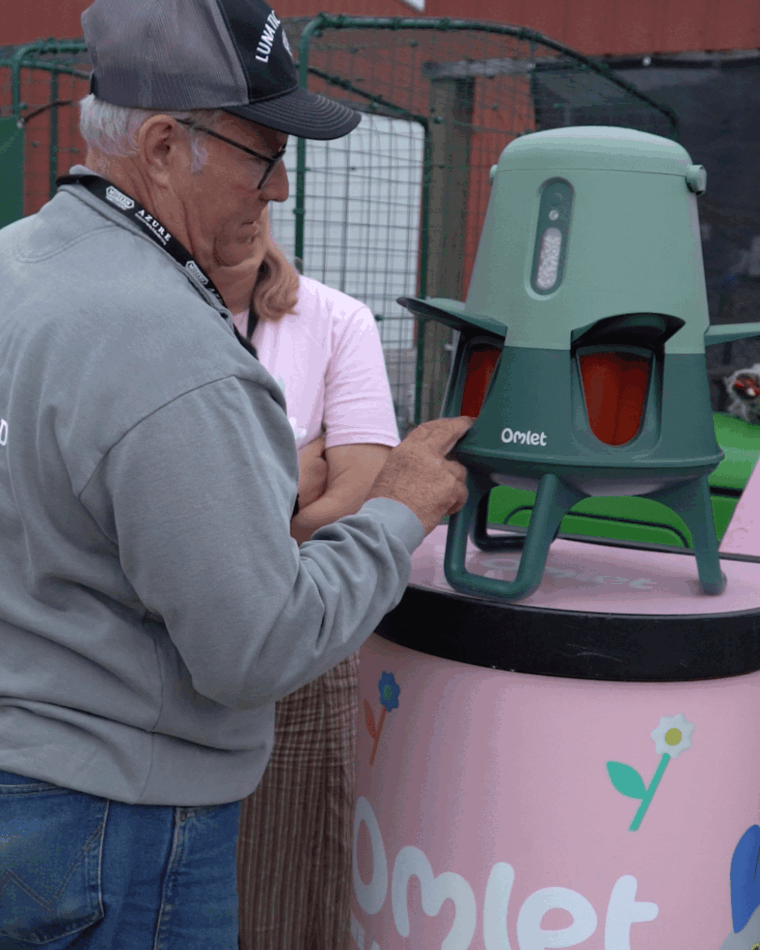
Don’t forget the feed
Fresh pasture is only part of the picture. Chickens still need a nutritionally balanced main diet, and wasted feed can add up quickly. When we showed Joel Omlet’s Smart No Waste Chicken Feeder, his reaction was immediate. “Wow, now this I like! This is very good.” For Joel, it solves a real problem. “Wasted feed is a huge problem, and it adds up, this is really solving that waste problem.” The Smart No Waste Feeder helps keep food contained rather than scattered across the run, which means no mess, no waste, and no rodents.
Fresh ground, happier chickens
Joel’s advice comes back to a simple idea: chickens thrive when their world changes with them. Moving a coop gives your flock fresh grass to scratch through, new things to peck at, and a cleaner patch to call home. It also gives your lawn time to recover, spreads nutrients more evenly, and turns everyday chicken keeping into something that benefits the whole garden.
Not every garden has the space for daily rotation, but for chicken keepers who do, a movable setup makes the difference between a coop that stays put and one that works with the natural rhythms of the flock. With wheels and handles available on all Omlet Eglu chicken coops, it’s easy to move your chickens onto a fresh patch of grass, then let the ground behind them rest, regrow, and get ready for their next visit.
This entry was posted in Chickens