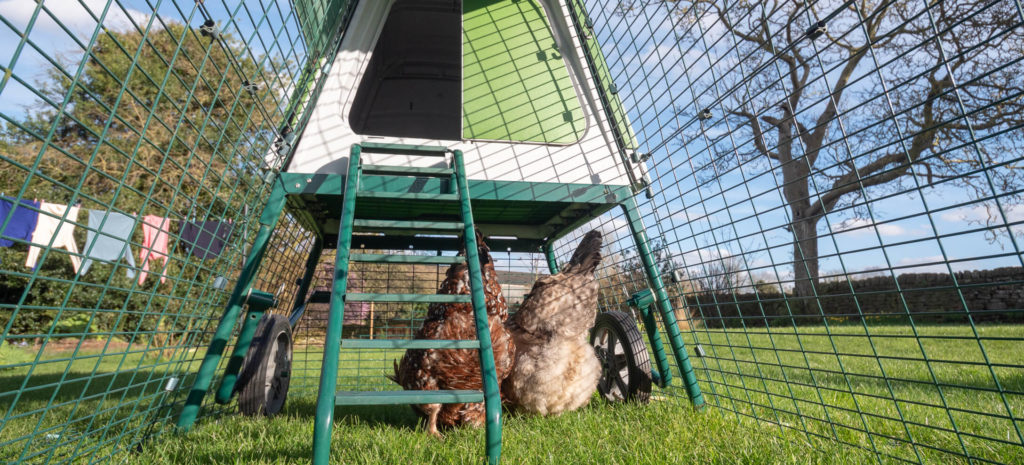
Like most other animals, chickens can suffer from parasitic worms. These are endoparasites that live inside your bird’s body, and are collectively called Helminths by vets.
Does my chicken have worms?
The three types of parasitic worms that your chickens are most likely to contract are:
- Roundworms. There are a number of different roundworms, with the large roundworm being the most common. They live anywhere in the bird’s digestive system, and can sometimes be spotted in your chickens’ droppings.
- Gapeworms. These nasty parasites attach themselves to the trachea of the chicken, hooking on without moving.
- Tapeworms. These attach themselves to the lining of the intestine and can get really long and unpleasant. They are less common, but will more significantly affect the bird.
It’s not always straightforward to tell if your chicken has worms, but symptoms may include a paler comb, decreased egg production, diarrhoea and increased appetite without weight gain. A chicken who has been infected with gapeworm will stretch their neck and gasp for air. Sometimes you won’t spot an infection until it’s really serious and possibly untreatable.
To worm or not to worm
Many chicken keepers therefore choose to worm their chickens regularly to prevent them getting infected, usually once in spring and once in autumn. This is normally done using Flubenvet, a poultry specific wormer you can get at the vets that will kill both the worms and their eggs. Make sure you get a worming treatment that is suitable for chickens, and check if you should be discarding the chicken’s eggs while she is being treated. Always worm all chickens at the same time.
Other chicken keepers think it’s better to only treat chickens that have a confirmed infection. This is partly because some wormers are only effective on particular parasites, and will be pointless if your chickens have a different type of worm. Some also think it’s unnecessary to stress the system by giving the birds treatment for an issue they might not have. Additionally, it can be pricey to worm a whole flock twice a year.
If you don’t want to treat your chickens without a diagnosis, but suspect they might have worms, you can get their droppings tested for presence of eggs. Ask your vet if they will do it for you, or you can send the droppings off to a laboratory in pre-made kits.
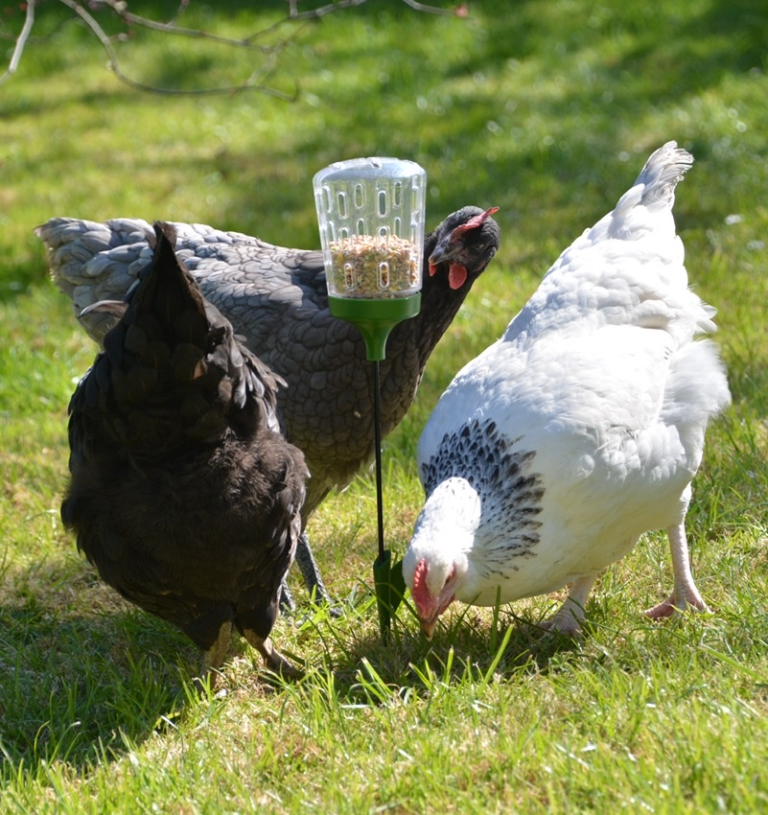 Prevent infections
Whether you decide to treat only confirmed worm cases or worm preventatively, it’s always best to do everything you can to make sure your chickens don’t contract parasites.
One of the best things to do is to regularly move their coop and run to a new patch. This will stop serious outbreaks, as it stops the life-cycle of the worms. Worm eggs are expelled in the droppings from infected birds, and survive on the ground for a surprisingly long time before they are picked up by foraging chickens. This is called a direct life-cycle, as the worm doesn’t need a host animal to get to your hens. Worms that have an indirect life-cycle on the other hand let their eggs first be ingested by for example earthworms, slugs or centipedes, where they lay dormant until the host is eaten by one of your chickens. The larvae hatch inside your hens, and the cycle repeats.
To prevent an unbreakable chain of worm infestations, it’s therefore important to regularly move your chickens. This is made easy by portable chicken coops like the Eglu Cube or the Eglu Go UP.
Another useful thing is to keep the grass mowed as the ultraviolet light from the sun can kill off potential worm eggs in your chickens’ droppings. Clean the run every week and scoop up droppings and wet bedding. If one of your chickens is infected it’ll be very difficult to get rid of all worm eggs from the ground, but every little helps!
Finally, many chicken keepers swear by the mineral supplement Verm-X. It’s a herbal formulation that works to create an environment in the gut that is able to eradicate and expel any intestinal challenges. This can be given as a supplement to your flock regularly to help their immune system stay on top.
This entry was posted in Chickens on September 22nd, 2020 by linnearask
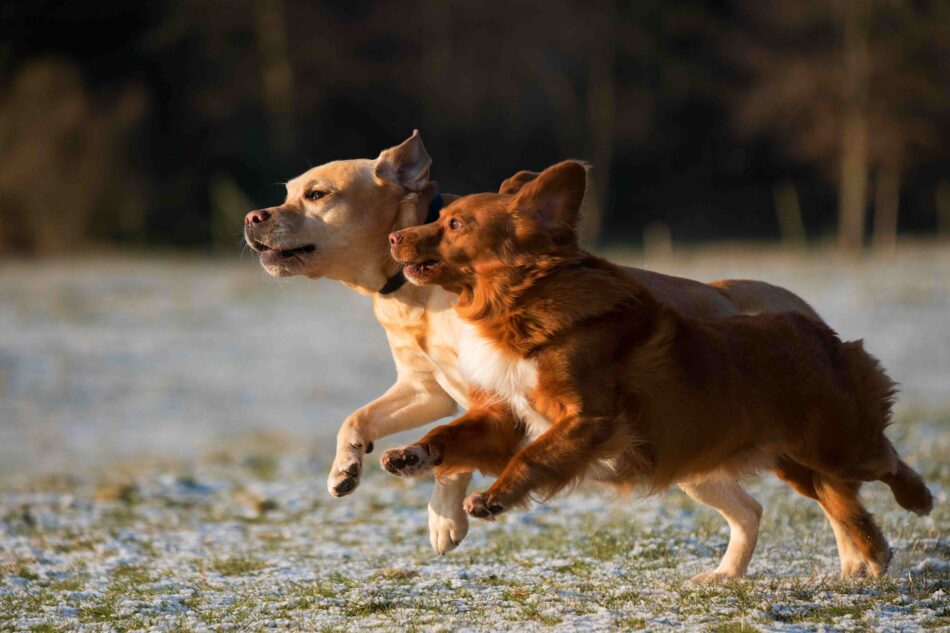
Playdates for dogs are an increasingly popular calendar fixture for dog owners. The fact that these most sociable of animals like to socialise should not come as a great surprise. But there is, of course, far more to a successful get-together than simply unleashing a kennelful of canines into your back garden!
Our ten tips will help ensure that your pooch party goes with a woof rather than a snarl.
1. Don’t Invite Enemies!
The guest list is possibly the most obvious party-success factor of them all, but it is one that often gets ignored. For example, your friend might have a Jack Russell that your Labradoodle simply hates. And yet inviting your friends and their dogs is an obvious thing to do when arranging a doggy date. A territorial or bad-tempered dog that doesn’t get along with your pet is not going to be the life and soul of your doggy date. And, of course, your own dog needs to be a sociable hound host, too.
2. Avoid Chalk-and-Cheese Syndrome
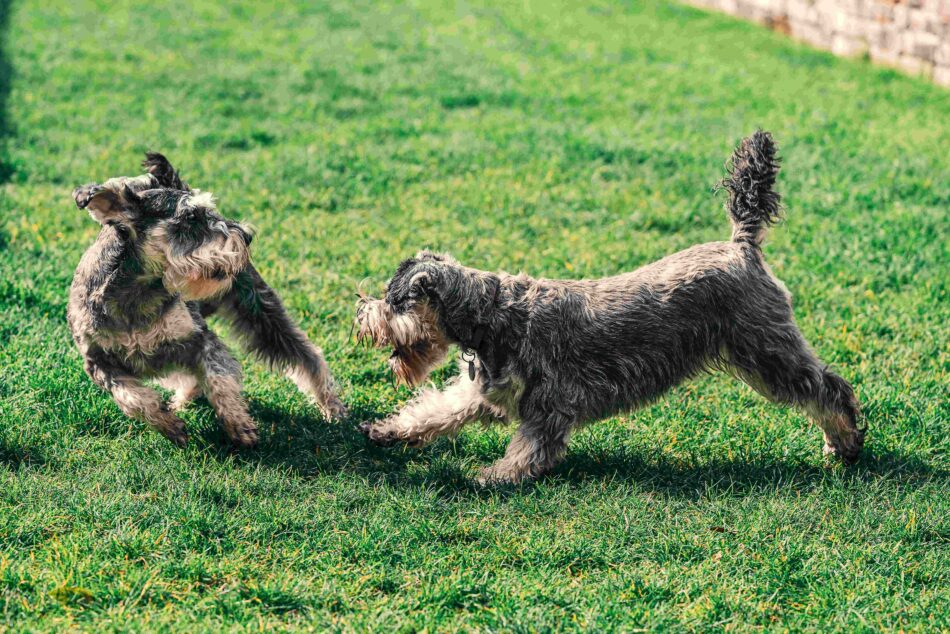
Dogs tend to play best with friends of their own size and of a similar age. An older dog doesn’t want to be harassed by a bunch of excitable puppies, and a small terrier doesn’t always want to be stalked by an enthusiastic pack of Retrievers. An overweight or arthritic dog may suffer, too – they may want to keep up with the others, so as not to miss out on the fun, which may result in more harm than good.
The exception to the chalk-and-cheese rule is when dogs already know each other. If you know they’re friends already, invite them – although you still need to watch out for the reactions of the other guests.
3. Keep the Numbers Down
The difference between a happy group of dogs and a rowdy pack is a fine line. As a rule of thumb, keep the number of dogs to six or below on a doggy date, to keep things under control.
4. Invite Humans Too!
A doggy date isn’t an excuse for owners to leave their dogs in a crèche for a couple of hours. It only works if the owners are present; and an owner who brings more than one dog should, ideally, bring more than one human too.
5. Make Sure the Space is Suitable
There are all kinds of places you can hold a doggy playdate, whether indoors or outdoors, and the guest list should match the space. Six Huskies in a kitchen isn’t going to work, and open gates or gaps in a fence are just asking for trouble. You will also need to dog-proof the room or the garden, removing access to anything that’s fragile, toxic, edible or out-of-bounds for whatever other reason. The host dog and its guests should not have their own toys or bones lying around, either – all available toys should be neutral. If the host dog is very territorial, it simply isn’t going to work unless you arrange the playdate in a neutral space.
6. Meet and Greet
The dogs should all be formally introduced before the doggy date begins, even if they have met before. Owners should have their pets on a lead, and the dogs should be made to sit, in a semicircle so they can all see each other. They can then mingle on loose leads. Only when everything is looking sociable should the dogs be let off the lead completely. Any dissenters will have to be kept on a lead until they get into the spirit of the party. If, for whatever reason, one of the doggy guests falls out with another, it should be led quietly away on a lead until the situation has calmed down.
7. Allow Downtime
Some dogs have more energy, patience or bravery than others. On a doggy date, it always helps to have a hidey hole where a dog that needs to catch its breath can take time out. For smaller dogs, this can be the owner’s arms. Larger dogs will need a quiet corner, indoors or out. In a larger garden, they will be able to find their own space to chill. Dogs are very good at body language, and the others will recognise that the resting dog is doing just that, and not playing hide and seek.
8. Provide Refreshments
Busy dogs will need to drink, so one or more drinking bowls is essential. A supply of treats will keep the edge off their appetites, too.
9. Play Some Party Games
Games of fetch, hide and seek, sit and wait, agility tests or obstacle courses are all great ways to keep the party happy and active. Treats can be used as prizes!
10. Avoid Too Much Sun
If it’s a really hot day, an outdoor doggy date will needs lots of shade, lots of water and should involve only the very fittest dogs. Heat can be a health hazard for weaker animals. Remember – you can always postpone.
This entry was posted in Dogs on September 22nd, 2020 by linnearask
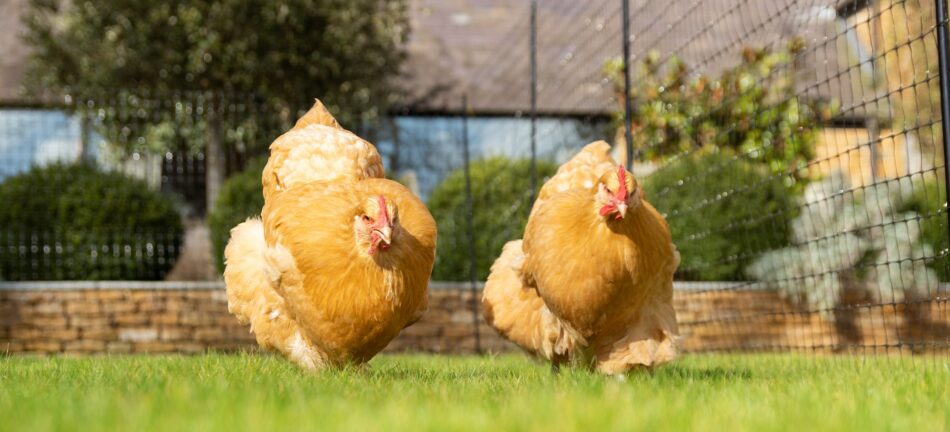
Making sure your flock is healthy and happy is the responsibility of all chicken keepers. Knowing how to give your chicken a health check will enable you to see that all of your hens are feeling their healthiest. When combined with adequate shelter, nutrition, and enrichment, regular health checks will help your chickens live long, healthy lives. Learn when and how to give your chickens health checks, and familiarise yourself with what’s normal so that you can recognise when something is amiss.
Why are chicken health checks important?
Like other pets, injuries and illness can occur in chickens. Since chickens are prey animals, they are masters at hiding pain and weakness. So while some illness or injuries may seem to occur suddenly to the untrained eye, there may be subtle hints that can be detected through routine health checks.
Routine chicken health checks will also give you a baseline for what’s “normal” for each individual hen. By knowing how your chickens normally look and feel, you’ll be able to more quickly identify a potential issue. Time is of the essence when your chickens are feeling “off” — making regular health checks a vital part of your flock-care routine.
How often should I give my chickens a health check?
It’s likely that you’ll observe your chickens daily as they go about their business in the yard or run. But weekly chicken beak-to-tail health checks are best for heading off potential problems. Each week, handle your hens and go through this checklist:
Eyes
Your chicken’s eyes should be clear, bright and fully open. Any amount of discharge, whether clear and watery or thick and yellow or green, is abnormal. Their eyes should also be properly lubricated and not appear dry, and third eyelids should slide easily and retract fully.
Nose
Nostrils, or nares as they are called in chickens, are located on the top of the beak near the eyes. Nares should be clean and free from debris, and should not have any discharge. Breathing sounds should not be audible.
Beak
Your chicken’s beak should be smooth, without cracks or other damage. The top and bottom should align, with the top being slightly longer. Healthy chickens keep their beak closed most of the time.
Comb
A grown chicken who is not broody or moulting should have a firm, bright red comb. It should be positioned according to the breed standard, i.e. if the breed’s comb is upright, it should not be hanging or looking shrivelled.
It’s especially important to check combs and wattles in winter, as they are prone to frostbite. Larger combs can be protected by a daily layer of vaseline.
Crop
Chickens have a “crop” at the base of their esophagus that holds their food before it’s moved through the rest of their digestive system. You can feel the crop by palpating by the breastbone of your chicken at the base of their neck. It’s easiest to feel when your chicken has just eaten — it will feel firm and about the size of a golf ball. Empty crops usually can’t be felt.
When you first let your chickens out in the morning their crops should be empty, as they should have spent all night digesting their food. After eating, the crop will feel firm, but not rock-hard. If it never feels empty, full even after not having food all night, or if your hen’s breath is foul smelling, you could be dealing with an impacted or sour crop.
Feathers
With the exception of moulting season in chickens, your hens’ plumage should be full and shiny. Bald patches, broken feather shafts, or unkept feathers can all be signs of stress, parasites, or behavioural concerns.
Legs and feet
Your chicken’s legs should appear smooth, with the scales lying flat against the bone — raised or dry scales can be an indication of scaly leg mites. The bottoms of the feet should be smooth and free of cuts, discoloured spots, or bumps. Large bumps on the bottoms of the feet can indicate bumblefoot in chickens, which is a bacterial infection.
Vent
The vent, or cloaca, of chickens is where eggs and eliminations are expelled from the hen’s body. Laying-age hens have pink, wide, and moist vents, while vents in older hens may appear dry and more pale. Healthy vents should never protrude or appear injured. Mites and lice gravitate toward this area, so check for black specks of debris or skin irritation.
Droppings
Slide out dropping trays, like those on Eglu chicken coops, help you keep an eye on your flocks eliminations. Chicken droppings should be formed and somewhat firm, and dark brown in colour. Loose, white portions on these droppings are also normal. Your chickens’ droppings will vary depending on their diet for the day, but should always revert back to “normal” within a day or two of eating new or diverse foods. Extended periods of loose stool, or bloody stool is an indication of illness or stress.
What to do if your chickens aren’t feeling their best
If any of your findings during the chicken health check are abnormal, it’s best to separate the affected hen from the rest of the flock and contact your veterinarian for further guidance. Make sure that you have a veterinarian that treats poultry as a point of contact. Some veterinarians may be able to come to you, or give you advice over the phone on how to proceed with any chickens that feel under the weather or that appear injured.
Isolate ill or injured hens until their symptoms have cleared, or until you’re advised by your veterinarian that it’s ok to reintroduce them back into the flock. Having a back up chicken coop to serve as a hospital wing or quarantine coop is always a good idea. This will ensure that the chickens that any chickens that aren’t feeling their best will still be housed in the best accommodations possible — which will help aid in reducing their stress and boosting their recovery.
Omlet and your healthy hens
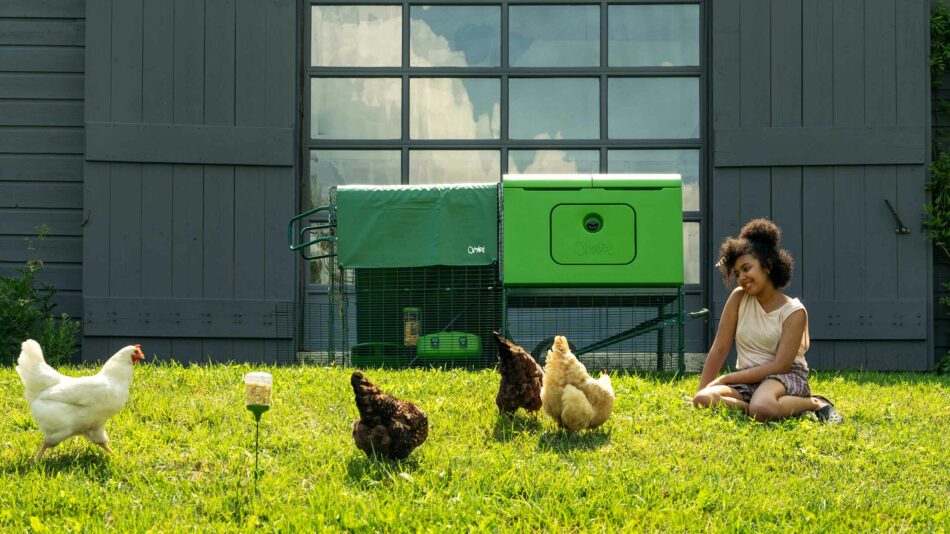
A healthy flock starts with their housing and care. Our chicken coops are easy to clean, and offer the support and security that your flock needs. When they’re not sleeping or laying eggs in their coop, your hens will enjoy their time outside safely inside our walk in chicken runs, protected from predators. Add chicken run weather covers, and your flock will be ready to enjoy healthy, happy seasons in their home with you.

This entry was posted in Chickens on September 14th, 2020 by linnearask
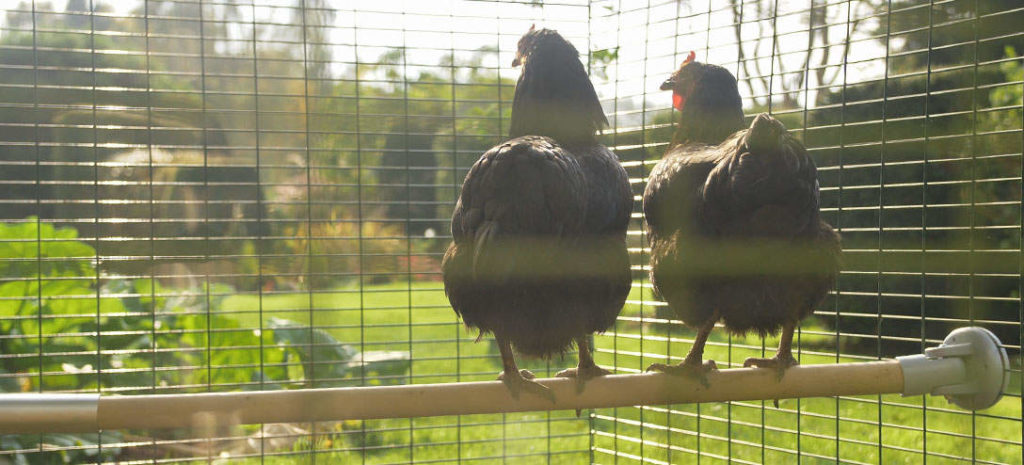
Chickens’ fondness for perches is instinctive. Our pet chickens descend from the Asian Jungle Fowl, that roosts high up on tree branches, and holding on to a perch is as natural to hens as scratching and egg-laying.
Most of the breeds we keep today are however not able to get up a tree even if they were offered one to roost in – they are too big and heavy. But by holding onto something, chickens get a sense of security, as perching initially was a strategy to get away from predators.
The Eglu Chicken Coops have perfectly rounded roosting bars that the chickens will love sleeping on at night, but it’s advisable to also provide them with a perch in the run. A wooden stick might not seem like much fun to us, but a perch is an excellent way of enriching their enclosure.
The Omlet Chicken Perch is purposefully designed to be comfortable and easy for hens to use, and it is also durable and super simple to install on your run. Choose between the 1m or 2m, and add enough to make sure all your chickens have a spot to take a break and watch the world go by.
Chickens without perches are more likely to attract mites and lice, or pick up bacteria from sitting on the ground. The stress of not having a place to roost can also lower their immune system and reduce egg-laying.
Take this unique opportunity to save ⅓ on the Omlet Chicken Perch and give your chickens a new toy they will love! Use promo code PERCH4LESS at check out to claim the discount!
Terms and conditions
Promotion of third/33% off The Omlet Chicken Perch runs from 10/09/20 – midnight 14/09/20. Use promo code PERCH4LESS at checkout. Includes Omlet Chicken Perch 1m and 2m. Offer is limited to 2 Chicken Perches per household. Subject to availability. Omlet reserves the right to withdraw the offer at any point. Offer cannot be used on delivery, existing discounts or in conjunction with any other offer.

This entry was posted in Chickens on September 10th, 2020 by linnearask
Chickens are colour blind
FALSE – Chickens actually have superior colour vision to humans. Thanks to five light receptors in the eye (humans only have three), they can see many colours more vividly than us.
Chickens can be half male, half female – split down the middle
TRUE – Due to a phenomena called bilateral gynandromorph there are chickens where one side of the body is male (large wattle, spur and muscular breast etc.) and the other side is female (duller plumage, smaller comb, slighter build etc). Worth a google!
There are as many chickens as there are humans on earth
FALSE – There are almost 4 times as many chickens as there are humans, more than 25 billion. In fact, there are more chickens in the world than any other bird.
Chickens navigate through magnetic fields
TRUE – Like other birds, chickens use the magnetic fields of the earth to orientate themselves and navigate around their home environment. Additionally, studies show that chickens use the sun to tell the time of day. Daylight intensity is also what tells cockerels when to crow in the morning and when to go roost at night.
Chickens are cannibals
UNDECIDED – You might have heard about cannibalism in poultry, and it does happen that chickens start pecking the flesh of other hens. This is however not a natural behaviour seen in the wild, but a result of a stressful environment with limited space in large egg or meat factories. A happy chicken will not eat its friend.
Chickens have no taste buds
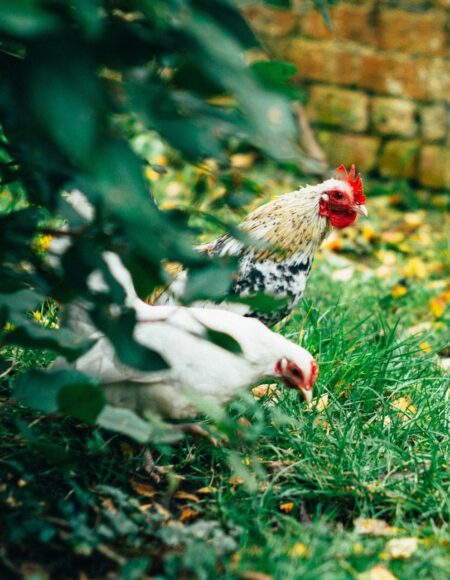
FALSE – While it may seem like chickens will eat just about anything you put in front of them, they do have taste buds, and personal preferences. A chicken can’t taste sweetness or spiciness, but can tell saltiness, sourness and bitterness apart.
The colour of the egg affects the nutritional content
FALSE – Despite what some egg producers have claimed during the years, brown eggs are not healthier than while ones, or vice versa. The colour of the shell only depends on the breed of chicken it came from, and will have no impact on taste or nutritional content.
If you chop their heads off, chickens will keep running
TRUE – Some chickens will indeed keep running after having their head chopped off. The pressure from the axe triggers nerve endings in the neck, sending a message back to the muscles telling them to move, without the brain actually being involved.
The chicken is then moving while actually being dead, but in the case of Miracle Mike, the farmer who tried to kill him aimed a bit high and accidentally left a bit of the brain that chickens keep at the back of their necks. This made it possible for Mike to live for another 18 months (!) after his head had been removed.
You can hypnotise a chicken
TRUE – There are several ways of putting a chicken in a trance, but the most common one involves holding the chicken with its head close to the ground, and drawing a line in the ground going outwards from the beak. This will paralyse the chicken, and she will stay laying still until you clap or poke her.
While it probably won’t hurt your chicken to hypnotise it like this, it’s unclear how much stress it causes her, so make sure not to do it too frequently.
This entry was posted in Chickens on September 1st, 2020 by linnearask
 Free returns
  180-day guarantee
  Sign up to our newsletter