 Free returns
  180-day guarantee
  10% off your first order
 How to Keep Rats Away from Your Chicken Coop (and Their Feed)
Rats are not usually interested in your chickens. What they’re after is a reliable, easy meal, and a chicken coop that has spilled feed on the run floor, scattered treats, or unattended eggs overnight can look very appealing to a hungry rodent. The good news is that most of what makes a chicken setup attractive to rats is entirely within your control. Keeping your coop and run clean, your feed stored securely, and your flock shut in at night can make your setup far less rewarding for rats to visit.
The short answer: Remove the food source, close off entry points, and secure your flock after dark. Do all three consistently, and rats will look elsewhere.
Why Do Chickens Attract Rats?
Chickens attract rats when their coop and run provide easy access to food, water, shelter, and nesting materials. Rats are opportunistic feeders, and a backyard chicken setup that isn’t actively managed can tick every box they’re looking for. The good news is that the chickens themselves are rarely the draw.
What Rats Are Really After (Spoiler: It’s the Feed, Not the Flock)
Chickens create a consistent food source, particularly when feed or treats are scattered across the run floor or left out overnight. Rats are most active after dark, so anything left in the run by dusk becomes a potential invitation.
Common attractants include:
- Spilled pellets or scratch grains on the run floor
- Open or loosely covered feed bags stored nearby
- Treats not cleared away before nightfall
- Standing water in waterers or puddles
- Eggs left in nesting boxes overnight
The Risks Rats Pose to Your Chickens and Coop
Rats don’t just steal feed. Left unchecked, they can cause real damage to your setup and create a genuine health risk for your flock.
- Contamination: Rats carry diseases including leptospirosis and salmonella, which can be spread through their droppings and urine in feed and water.
- Structural damage: They can chew through wooden coops, plastic feed containers, electrical wiring, and stored supplies.
- Egg theft: Rats will raid nesting boxes for eggs, especially if they are left overnight.
- Risk to young chicks: While adult chickens are rarely at risk, very young chicks can be vulnerable to rat attacks.
A clean, secure setup protects your flock and makes rats far less likely to settle nearby.
How to Stop Rats Eating Chicken Feed
The most effective way to deter rats is to remove their food source. Storing feed securely and reducing mess and waste in the run makes your chickens’ space far less rewarding for rodents to visit. A clean feeding routine is one of the simplest and most impactful changes you can make.
Store Feed in Rat-Proof Containers
Rats can chew through plastic bags and thin plastic buckets with ease. If your feed is stored in anything other than a solid, airtight container, it’s accessible.
- Store chicken feed and treats in airtight metal containers with tightly fitting lids.
- Keep feed away from the coop where possible, ideally in a locked shed or garage.
- Clean up any spills immediately, even small ones.
- Never leave open feed bags or buckets in sheds, runs, or outdoor storage areas overnight.
Best No-Waste Chicken Feeder for Keeping Rats Away
The feeder you use matters as much as where you store the feed. Chickens are messy eaters and a poorly designed feeder that scatters pellets across the run floor is essentially laying out a buffet for any rat in the area.
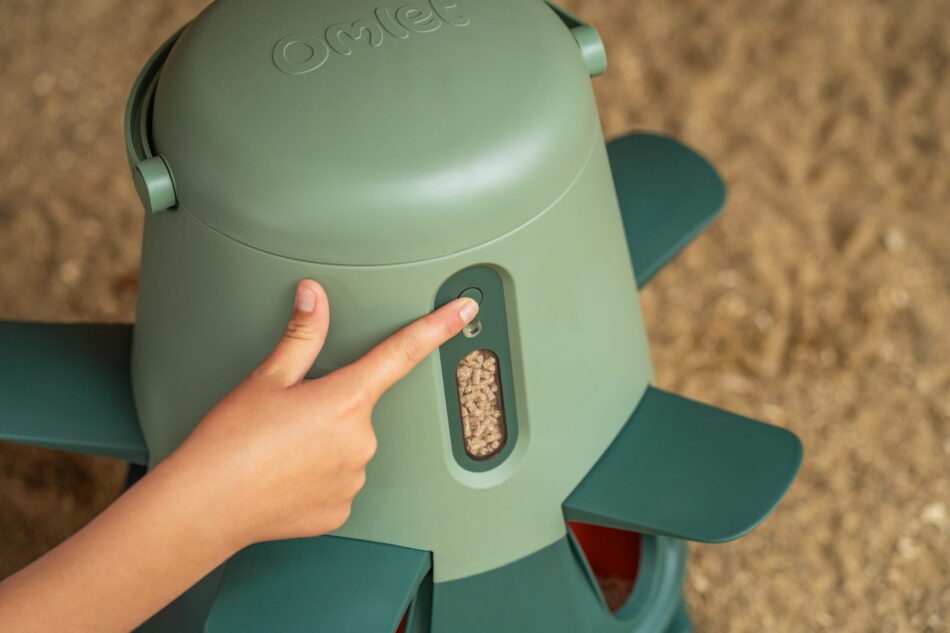
Choose a feeder that’s built to stop mess. The Omlet No Waste Chicken Feeder was designed specifically to stop feed pellets spilling onto the ground, which keeps the run cleaner and removes one of the biggest rat attractants. Raising your feeder to a comfortable height for your chickens also makes it harder for rodents to access. Hanging the feeder takes this a step further.
It’s also important to bring your feeder in every single night to remove the temptation for nearby rats. But this also means remembering to put the feeder back into the run again in the morning for your chickens.
How an Automatic Chicken Feeder Helps Deter Rats at Night
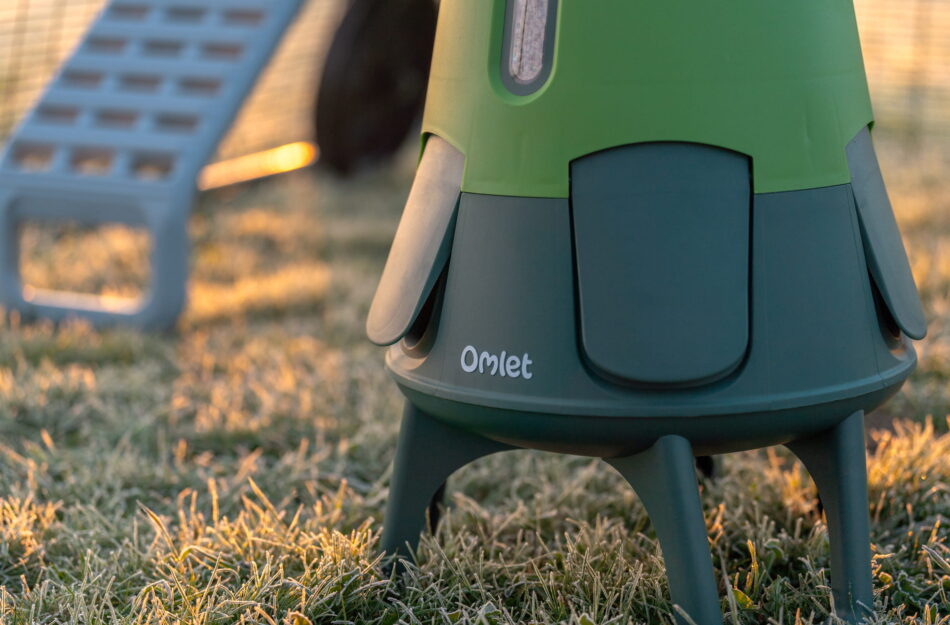
An automated feeder removes the need to remember to bring the feeder in at night and put it back out again in the morning. The Omlet Smart Chicken Feeder has the same no-spill design that keeps mess off the run floor, but it also automatically closes access to feed at night, when rats are most active, and opens again in the morning. You can connect it to your phone and receive notifications when it opens, closes, runs low on feed, or needs a battery change.
The result: your chickens have access to fresh feed all day, and rats have no access at all after dark, all without you having to lift a finger.
How to Handle Treats Without Attracting Rodents
Treats are a common source of mess in the run, and leftover corn or on the floor overnight are exactly the kind of easy meal rats are looking for.
- Offer only as many treats as your chickens can finish before dusk.
- Use a slow-release treat dispenser like the Omlet Peck Toy, which releases a small amount of corn at a time as your chickens interact with it, keeping excess off the ground.
- Hang treats in a Caddi Chicken Treat Holder to keep food off the floor and easy to remove at the end of the day.
- Clear away any leftover treats before dusk, every day.
How to Rat-Proof Your Chicken Coop and Run
Rat-proofing is about closing off entry points, removing hiding places, and keeping eggs and feed out of reach. Rats can squeeze through surprisingly small gaps, and they’re persistent diggers, so the physical setup of your coop and run matters a great deal. Regular checks around the structure can stop a small problem from becoming a much larger one.
Use Hardware Cloth, Not Chicken Wire
This is one of the most important upgrades you can make. Chicken wire is designed to keep chickens in, not to keep pests and predators out. Rats can squeeze through the larger gaps, and they can chew through the thinner wire over time.
To stop rats digging under the run, bury hardware cloth several inches below ground or extend it outward from the run base as an anti-tunnelling skirt.
Collect Eggs Daily to Remove the Temptation
Fresh eggs are a significant draw for rats, especially when they’re left in nesting boxes overnight. A consistent egg-collection routine is one of the easiest ways to reduce rat interest in your coop.
- Collect eggs every day, ideally in the morning and again in the afternoon if your hens are laying well.
- Check nesting areas for hidden or broken eggs, which can be just as attractive to rodents.
- Keep nesting boxes clean and replace soiled bedding regularly.
An Eglu Chicken Coop is designed with easy egg access and coop cleaning in mind, making daily egg collection and spot cleans quick and straightforward.
Natural and Physical Deterrents That Actually Work
Beyond the structure itself, the environment around your coop can either invite or discourage rats. A tidy, open space with no obvious hiding spots is far less appealing than a cluttered, overgrown one.
- Keep grass trimmed short around the coop and run.
- Remove piles of wood, leaves, or garden clutter where rats could nest or shelter.
- Use motion-activated lights around the coop area to make night-time visits less comfortable for rodents.
- Seal any holes in nearby sheds, storage areas, or fencing before rats can establish a nest.
- Keep outdoor cat food, bird seed, compost bins, and rubbish secured well away from the chicken area.
One thing to avoid: rodent poisons and snap traps placed in or around the run. These pose a real risk to your chickens, other pets, and children, and are not a sustainable solution when the underlying attractants are still present.
The Easiest Way to Keep Rats Out at Night
Night-time is when rats are most active and most likely to investigate your chicken setup. Securing your flock inside the coop after dark and making sure their feed is inaccessible are two of the most effective things you can do, and when combined, they cover the two biggest reasons rats visit in the first place.
How an Automatic Coop Door Shuts Rats Out While Chickens Sleep
A coop door that’s left open after dark is an open invitation. Rats can slip inside to raid nesting boxes for eggs, access any remaining feed, or simply explore the warmest, driest shelter available.
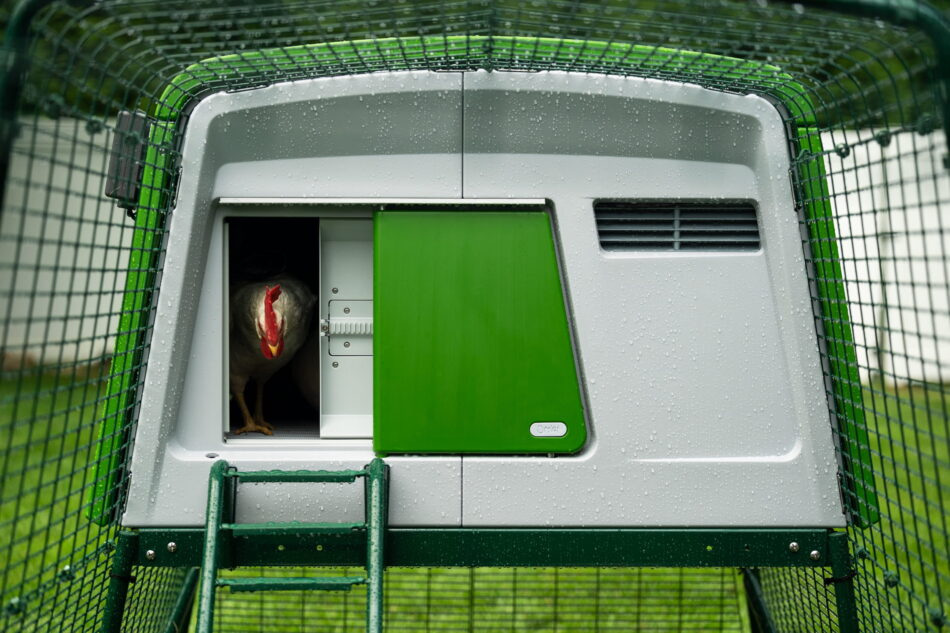
An Automatic Chicken Coop Door closes your chickens safely inside at a time you choose, every night, even when you’re away from home. You can set it by timer or light sensor, and Omlet’s smart door connects to your phone so you can get notifications when the door has opened and closed.
Pairing an automatic door with a smart feeder that closes overnight gives rats fewer reasons to visit and fewer ways to get close to your chickens. It’s the combination that makes the biggest difference to preventing rats, and makes life easier for you.
Key Takeaways: How to Keep Rats Away from Your Chicken Coop
- Rats are attracted by easy access to feed, treats, water, and eggs, not by your chickens themselves.
- Store feed in airtight, rat-proof metal containers and clean up spills as soon as you spot them.
- Use a no-spill Chicken Feeder to keep the run floor clean, and bring it in at night or switch to a Smart Feeder that closes automatically.
- Use slow-release treat dispensers and a Caddi Treat Holder to keep treats elevated and easy to remove before dusk.
- Reinforce vulnerable areas with 1/4-inch hardware cloth and keep the run clear of clutter and hiding spots.
- Collect eggs every day and keep nesting areas clean.
- Shut your chickens in securely each night with an Automatic Chicken Coop Door.
Omlet and Your Flock
A rat-free chicken setup starts with less mess, better feed storage, and secure night-time routines. Omlet Chicken Feeders, Caddi Treat Holders, Eglu Chicken Coops, and Automatic Chicken Coop Doors are all designed to make those routines easier to stick to, so you can spend less time worrying about rodents and more time enjoying your chickens.
This entry was posted in Chickens
2 replies on “How to Keep Rats Away from Your Chicken Coop (and Their Feed)”
Another way to help keep rats away is – if you have a permanent wooden shed-type coop – to build it so it is raised a foot or more off the ground. Coops that sit directly on the ground – even if they’re on a concrete slab – seriously encourage rats to burrow underneath. (Been there, done that.)
Rats are attracted more so to your chickens food, water and eggs but will sometimes also prey on smaller birds, choosing to attack at night, leaving you with an unwelcome surprise come morning. Your first line of defence is a well designed chicken coop and feeder.